
Starting a crochet business is more than just turning your passion for yarn into profit—it’s about building a legitimate, sustainable enterprise that operates within the law. Whether you’re selling handmade blankets on Etsy, offering custom amigurumi commissions, or launching your own pattern brand, understanding the foundational legal requirements is non-negotiable. Crochet business basics encompass far more than choosing the right hook size or color palette; they include navigating licenses, taxes, and legal structures that protect both you and your customers. In this comprehensive guide, we’ll walk through every essential step—from registering your business to filing accurate tax returns—so you can focus on creativity without compromising compliance. Drawing from real-world experience working with dozens of fiber artists and handmade entrepreneurs, this article delivers actionable, trustworthy guidance tailored specifically to the unique needs of the crochet community.
What This Topic Means for Crochet & Knitting Businesses
For many independent makers, the idea of dealing with “business stuff” feels overwhelming, even intimidating. After all, you didn’t start crocheting to fill out government forms—you did it because you love crafting beautiful, functional items with your hands. However, once you begin accepting payment for your work—whether online, at craft fairs, or through word-of-mouth commissions—you’ve crossed the threshold into entrepreneurship. And with that shift comes responsibility.
Ignoring legal and financial obligations doesn’t just risk fines or penalties; it can jeopardize your reputation, limit your growth potential, and even expose you to personal liability. Imagine a customer claiming an allergic reaction to the yarn in a baby blanket you sold—or worse, a fire caused by a poorly wired LED element in a decorative piece. Without proper business registration, insurance, or clear terms of service, you could be held personally accountable.
In contrast, handling crochet business basics correctly from day one builds trust, professionalism, and long-term resilience. It signals to customers, collaborators, and platforms like Etsy or Shopify that you’re serious about your craft as a business—not just a hobby. Moreover, organized record-keeping and compliant tax practices make it easier to track profits, reinvest in your brand, and eventually scale beyond solo operations.
From working with multiple crochet brands over the past decade, I’ve seen firsthand how early attention to legal fundamentals separates thriving micro-businesses from those that fizzle out due to avoidable administrative stress. The good news? Most requirements are straightforward once broken down—and many can be handled affordably, even for part-time sellers.
Why This Strategy Works Especially Well in the Crochet Community
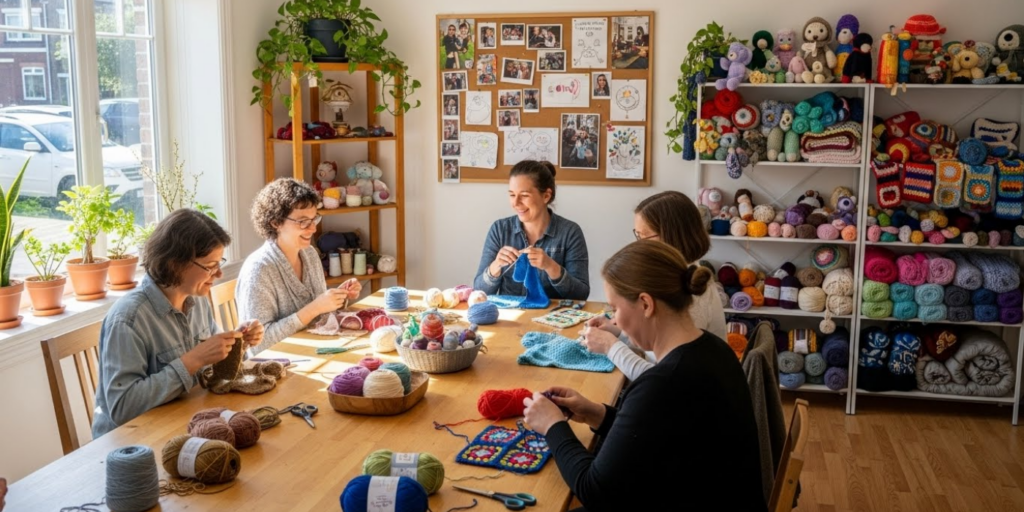
The handmade and fiber arts community thrives on authenticity, connection, and shared knowledge. Unlike mass-produced goods, crochet items carry the maker’s time, care, and creative vision—qualities that resonate deeply with conscious consumers. But this intimacy also demands greater accountability. Buyers aren’t just purchasing a product; they’re supporting an individual artist. That relationship flourishes when transparency and professionalism underpin every transaction.
Interestingly, the very nature of small-scale, home-based crochet businesses makes legal compliance more accessible—not less. Because most start as sole proprietorships with low overhead, the initial licensing and tax burdens are minimal compared to traditional retail or manufacturing ventures. Many states and municipalities offer simplified processes for cottage industries, especially those operating under certain revenue thresholds (often called “cottage food laws,” though similar principles apply to crafts).
Furthermore, digital marketplaces like Etsy, Ravelry, and Instagram have normalized best practices around business disclosures, return policies, and copyright notices—raising collective standards across the community. Experienced designers often recommend treating your crochet venture like a “real” business from sale #1, not sale #100. This mindset shift encourages habits like separating personal and business finances, documenting income/expenses, and researching local regulations before launching.
In essence, embracing crochet business basics aligns perfectly with the values of integrity and craftsmanship that define the fiber arts world. It’s not about bureaucracy—it’s about honoring your work and your customers with the same care you put into every stitch.
Materials, Tools, or Resources Needed
Before diving into paperwork, gather these essential tools and resources to streamline your legal setup:
- Business Name: Choose a unique, memorable name that isn’t already trademarked or in use locally. Check availability via your state’s Secretary of State website and domain registrars (e.g., GoDaddy).
- Business Structure Documentation: Decide whether you’ll operate as a sole proprietorship, LLC, S-Corp, etc. (More on this below.)
- Employer Identification Number (EIN): Free from the IRS (irs.gov). Required if you hire employees or form an LLC.
- Local Business License Application: Available through your city or county clerk’s office.
- Sales Tax Permit: If selling tangible goods, you’ll likely need one from your state’s Department of Revenue.
- Accounting Software: Tools like QuickBooks Self-Employed, Wave (free), or even a dedicated spreadsheet for tracking income and expenses.
- Business Bank Account: Keeps personal and business finances separate—a critical step for liability protection and clean bookkeeping.
- Record-Keeping System: Digital folders or physical binders for receipts, invoices, contracts, and tax documents.
- Legal Templates: Basic terms of service, privacy policy (if you have a website), and commission agreements. Platforms like LawDepot or Rocket Lawyer offer affordable templates, but tailor them to your specific offerings.
Many new makers overlook the importance of a dedicated email address (e.g., hello@yourcrochetbrand.com) and professional social media profiles. These small touches reinforce legitimacy and make communication clearer for customers and tax authorities alike.
Yarn Types and Fiber Considerations (When Applicable)
While yarn choice might seem unrelated to legal matters, it actually intersects with compliance in subtle but important ways—particularly regarding product safety and labeling.
If you sell items intended for children (e.g., toys, clothing, or nursery décor), you must comply with the Consumer Product Safety Improvement Act (CPSIA) in the U.S. This includes:
- Using only non-toxic, lead-free, and phthalate-compliant materials.
- Maintaining records of yarn and notions suppliers for traceability.
- Labeling products with tracking information (batch number, date of manufacture, maker contact).
Similarly, if you use natural fibers like wool, cotton, or alpaca, consider allergen disclosures. A customer with a lanolin sensitivity may react to untreated wool—even if it’s labeled “hypoallergenic.” Including fiber content on tags or product descriptions isn’t just helpful; it’s a risk-mitigation strategy.
Experienced designers often recommend sourcing yarn from reputable suppliers who provide material safety data sheets (MSDS) or compliance certifications. Keep copies of these documents on file. Should a product liability issue arise, your due diligence in material selection becomes a key defense.
Lastly, if you dye your own yarn or add embellishments (buttons, beads, etc.), ensure those components meet safety standards. Small parts on children’s items must pass choke-test requirements, and flame resistance may apply to home décor like blankets.
Skill Level Breakdown (Beginner / Intermediate / Advanced)
Understanding legal requirements doesn’t demand a law degree—but your approach should evolve as your business grows.
Beginner (Selling Occasionally – <$500/month):
At this stage, you’re likely operating as a sole proprietor under your legal name. Focus on:
- Checking if your city/county requires a basic business license (many don’t for very low-income hobbyists, but verify!).
- Reporting all income on your personal tax return (Schedule C).
- Collecting sales tax if required by your state (some exempt small sellers under economic nexus thresholds).
- Keeping simple records: save PayPal/Etsy statements and receipts for yarn purchases.
Intermediate (Consistent Sales – $500–$10,000/year):
Now it’s time to formalize:
- Register a DBA (“Doing Business As”) if using a brand name.
- Open a business bank account.
- Apply for a sales tax permit if not already done.
- Start tracking deductible expenses: yarn, patterns, shipping supplies, craft fair fees, home office %.
- Consider general liability insurance (~$300/year) for peace of mind.
Advanced (Scaling Up – $10,000+/year or hiring help):
Professionalization is key:
- Form an LLC to separate personal and business assets.
- Obtain an EIN (even if not legally required—it adds credibility).
- Work with a CPA familiar with creative small businesses.
- Draft clear terms of service, refund policies, and copyright notices for patterns.
- Explore business insurance bundles (liability + product + cyber coverage).
From working with multiple crochet brands, I’ve observed that intermediate-level makers benefit most from proactive legal structuring—before problems arise. Waiting until you’re sued or audited is far costlier than investing in prevention early.
Step-by-Step Guide
Follow this detailed roadmap to establish your crochet business legally and efficiently.
Step 1: Choose Your Business Structure
- Sole Proprietorship: Default for solo makers using their legal name. Simple but offers no liability protection.
- DBA (Fictitious Name): Allows you to operate under a brand name (e.g., “Stitch & Co.”) while remaining a sole proprietor. File with your county (~$10–$100).
- LLC (Limited Liability Company): Recommended once annual revenue exceeds ~$5,000 or you sell higher-risk items (e.g., baby products). Costs vary by state ($50–$500) but shields personal assets.
- S-Corp: Only consider after consulting a tax advisor—usually beneficial at higher income levels for self-employment tax savings.
💡 Tip: Use your state’s Secretary of State website to file LLC paperwork directly—avoid third-party services that charge excessive fees.
Step 2: Register Your Business Name
- Search your state’s business registry to ensure uniqueness.
- File a DBA with your county clerk if using a trade name.
- Secure matching social handles and a domain name immediately.
Step 3: Obtain Necessary Licenses & Permits
- General Business License: Required in most cities/counties. Apply online or in person (~$25–$100/year).
- Home Occupation Permit: If operating from home, check zoning laws. Many areas allow craft businesses with minor restrictions (e.g., no external signage, limited customer traffic).
- Sales Tax Permit: Mandatory in 45 states if selling taxable goods. Apply via your state’s Department of Revenue website—usually free and instant.
Step 4: Get an EIN (Employer Identification Number)
- Free from the IRS: https://www.irs.gov/businesses/small-businesses-self-employed/apply-for-an-employer-identification-number-ein-online
- Needed for LLCs, hiring employees, or opening a business bank account.
Step 5: Set Up Financial Systems
- Open a business checking account (many banks offer free options for low balances).
- Use accounting software: Wave (free), QuickBooks Self-Employed ($15/month), or a simple Google Sheets template.
- Track every expense: yarn, hooks, labels, shipping, website fees, education (e.g., pattern-writing courses).
Step 6: Understand Tax Obligations
- Income Tax: Report all revenue minus expenses on Schedule C of your personal tax return.
- Self-Employment Tax: ~15.3% on net profit (covers Social Security & Medicare).
- Sales Tax: Collect and remit based on your state’s rules. Some states require monthly, quarterly, or annual filings.
- Estimated Taxes: Pay quarterly if you expect to owe >$1,000 in federal taxes (Form 1040-ES).
Step 7: Create Essential Legal Documents
- Terms of Service: Outline payment terms, shipping policies, and limitations of liability.
- Privacy Policy: Required if collecting emails (e.g., via a newsletter).
- Copyright Notice: For original patterns—include © [Year] [Your Name]. All rights reserved.
- Commission Agreement: Specify deadlines, revisions, and ownership of custom designs.
Step 8: Maintain Compliance
- Renew licenses annually.
- File sales tax returns on time—even if you made $0 in a period (“zero returns” are often required).
- Keep records for at least 3–7 years (IRS audit window).
This process typically takes 2–6 weeks but can be done incrementally. Start with Steps 1–3 before your first sale, then build systems as revenue grows.
Common Mistakes and How to Avoid Them
Even well-intentioned makers stumble on legal pitfalls. Here are the most frequent errors—and how to sidestep them:
1. Assuming “Small = Exempt”
Many believe that selling under $600/year means no reporting is needed. False. The IRS requires all income to be reported, regardless of amount. Etsy may not issue a 1099-K unless you exceed $5,000 (as of 2024), but you’re still liable for taxes on every dollar earned.
✅ Fix: Track every sale from Day 1. Use a simple ledger or app like Mint.
2. Mixing Personal and Business Finances
Using your personal PayPal or bank account for sales blurs lines, complicates taxes, and voids liability protection (even with an LLC).
✅ Fix: Open a separate business account—even a free one from online banks like Novo or Lili.
3. Ignoring Sales Tax Nexus Rules
Selling online? You may owe sales tax in states where you have “economic nexus” (e.g., >$100,000 in sales or 200 transactions). Platforms like Etsy now auto-collect in many states, but verify your obligations.
✅ Fix: Use TaxJar or Avalara to monitor nexus thresholds and file returns.
4. Skipping Insurance
A $200/year general liability policy can cover lawsuits from product issues or accidents at craft fairs. Don’t risk your home savings.
✅ Fix: Get a quote from Next Insurance or Hiscox—they specialize in creative small businesses.
5. Using Copyrighted Patterns Commercially
Free patterns on blogs or Pinterest often prohibit resale. Selling items made from them violates copyright law.
✅ Fix: Only sell items from patterns explicitly labeled “commercial use allowed” or create your own designs.
6. Failing to Document Expenses
Without receipts, you can’t deduct costs—meaning higher taxable income. The IRS requires proof for any deduction over $75.
✅ Fix: Snap photos of receipts or use apps like Expensify to log purchases instantly.
In many crochet businesses, these oversights stem from overwhelm, not negligence. Break tasks into weekly 30-minute blocks—compliance becomes manageable.
Advanced Tips and Professional Insights
Once foundational compliance is in place, elevate your legal strategy with these pro techniques:
Bundle Licenses Strategically
If you plan to sell at out-of-state craft fairs, research transient vendor licenses. Some states (like Texas) offer multi-jurisdiction permits that cover dozens of cities—saving time and fees.
Leverage Home Office Deductions
If you dedicate space exclusively to your business (e.g., a craft room), you may deduct a portion of rent, utilities, and internet. Use the IRS’s simplified method ($5/sq ft up to 300 sq ft) for easy calculations.
Protect Your Brand Early
File a trademark for your business name/logo with the USPTO (~$250–$350/class). It prevents copycats and adds value if you ever sell your business. Prioritize this once you hit consistent $1k+/month revenue.
Use Contracts for Collaborations
Partnering with a yarn dyer or photographer? Draft a simple agreement covering deliverables, payment, and IP ownership. A verbal “handshake deal” won’t hold up in court.
Audit Your Digital Footprint
Review your Etsy shop policies, Instagram bio links, and website footer. Ensure they include:
- Business name and contact info
- Clear return/refund terms
- Copyright notice for patterns
- Disclaimer (e.g., “Handmade items may have slight variations”)
Experienced designers often recommend scheduling a quarterly “compliance check-in”—review licenses, update insurance, and reconcile accounts. Treat it like blocking off time for a big project; consistency prevents year-end panic.
Real-World or Hypothetical Examples
Consider “Maya’s Stitchery,” a hypothetical but realistic case study:
Maya started selling amigurumi on Etsy in 2023, earning $3,200 in her first year. She operated as a sole proprietor under her legal name, filed a DBA for “Maya’s Stitchery,” and obtained a $35 city business license. She tracked income/expenses in Wave and paid estimated taxes quarterly. When a customer requested a custom dinosaur toy for her toddler, Maya included a fiber content label (100% acrylic) and a small-parts warning tag.
In 2024, sales jumped to $18,000. Maya formed an LLC ($125 state fee), got an EIN, opened a business account, and purchased $299/year liability insurance. She also registered for sales tax permits in three states where she exceeded economic nexus thresholds. Her accountant helped her claim deductions for:
- $1,200 in yarn and stuffing
- $300 for craft fair booth fees
- $150 for a dedicated Instagram ads course
- $90 for shipping supplies
By 2025, Maya launched her own PDF patterns. She added a copyright notice to each file and updated her Terms of Service to clarify that buyers couldn’t resell or redistribute her designs. When a competitor copied her unicorn pattern, Maya sent a DMCA takedown notice—backed by her registered copyright—and the infringement was removed within 48 hours.
Maya’s story illustrates how scaling compliance alongside revenue minimizes risk while maximizing professionalism. No step was overly complex, but each built a stronger foundation.
Customization and Adaptation Ideas
Your legal setup should reflect your specific business model:
- Pattern Designers: Focus on copyright registration and clear licensing terms (e.g., “Personal use only” vs. “Sell finished items”). Consider adding a digital delivery disclaimer (“No refunds on PDFs”).
- Custom Commission Artists: Use a contract specifying scope, timeline, revision limits, and model release if posting client photos.
- Subscription Box Curators: Comply with recurring billing laws (clear cancellation instructions) and product safety standards for included items.
- Workshop Teachers: Add waivers for in-person classes (“Participant assumes all risks”) and verify venue insurance coverage.
If you sell internationally, research VAT/GST rules. The EU requires IOSS registration for shipments under €150, while Canada has provincial sales tax variations. Tools like Shopify automatically handle some cross-border tax collection—but verify accuracy.
Adapt templates to your voice. A playful amigurumi brand might phrase policies with warmth (“Oops! Changed your mind? We get it…”), while a luxury blanket line uses formal legalese. Authenticity matters—but clarity is non-negotiable.
Care, Maintenance, or Best Practices
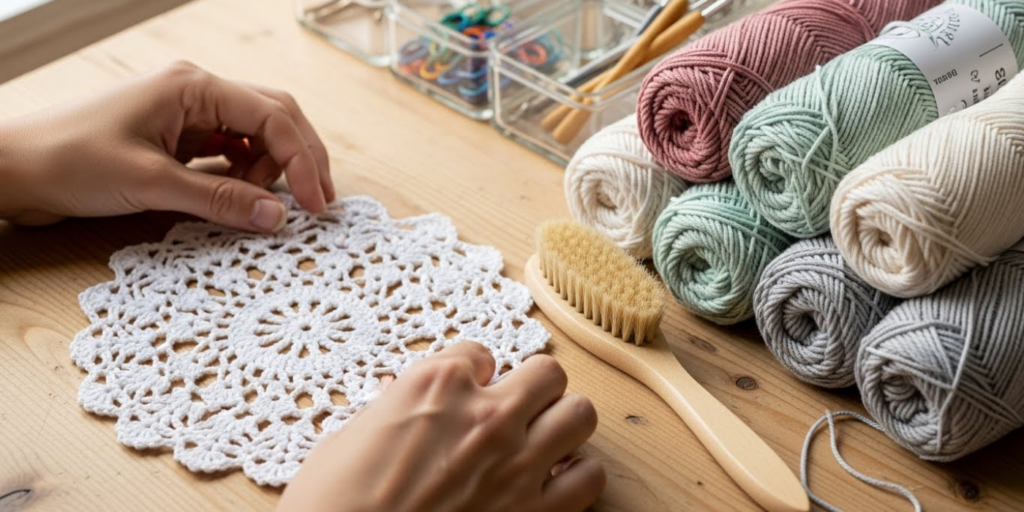
Legal compliance isn’t “set and forget.” Adopt these ongoing habits:
- Monthly: Reconcile bank/credit card statements with your accounting software.
- Quarterly: Pay estimated taxes (April 15, June 15, Sept 15, Jan 15).
- Biannually: Review insurance coverage limits; update if you’ve added high-value equipment or new product lines.
- Annually: Renew business licenses, update your registered agent (for LLCs), and back up digital records to cloud storage.
Store physical documents in a fireproof safe or safety deposit box. Digitize everything else with encrypted cloud services (Google Drive, Dropbox). Label files clearly: “2025_SalesTax_Q1_Texas.pdf.”
Also, stay informed. Subscribe to newsletters like the IRS Small Business Update or your state’s Department of Revenue alerts. Laws change—especially around online sales tax—and ignorance isn’t a defense.
Monetization Opportunities (Educational, Not Promotional)
Understanding crochet business basics unlocks smarter monetization:
- Digital Products: Once you grasp copyright, selling PDF patterns becomes low-risk/high-margin. Bundle tutorials with yarn kits for added value.
- Wholesale: Boutiques require W-9 forms and resale certificates—having your EIN and business license ready speeds up onboarding.
- Teaching: Platforms like Domestika or Skillshare ask for business documentation during payout setup.
- Affiliate Marketing: Disclose partnerships per FTC guidelines (“As an Amazon Associate I earn…”)—transparency builds trust.
- Crowdfunding: Kickstarter campaigns for new yarn lines need clear terms about delivery timelines and refund policies.
Crucially, clean books help you identify profitable niches. Maybe custom pet portraits yield 70% margins while blankets only bring 30%. Data-driven decisions beat guesswork every time.
Frequently Asked Questions (FAQ)
1. Do I need a business license to sell crochet items online?
Yes, in most U.S. cities and counties—even for online-only sales. Check with your local clerk’s office. Some rural areas exempt very low-income sellers, but verify officially.
2. How much can I earn before paying taxes on my crochet business?
All income is taxable, regardless of amount. However, you only pay net tax (after deducting expenses). If you earn $500 but spend $600 on yarn and fees, you report a $100 loss—reducing other taxable income.
3. Is an LLC necessary for a small crochet business?
Not legally required, but highly recommended once you earn over $5,000/year or sell items with liability risk (e.g., children’s toys). An LLC protects your personal assets from lawsuits.
4. Do I have to collect sales tax if I sell on Etsy?
It depends on your state and sales volume. Etsy automatically collects and remits sales tax in many states, but you’re still responsible for filing returns in others. Always confirm your obligations via your state’s revenue department.
5. Can I write off yarn and supplies as business expenses?
Yes! Any ordinary and necessary expense for your business is deductible. Keep receipts for yarn, hooks, labels, shipping materials, and even a portion of your internet bill if used for business.
6. What’s the difference between a DBA and an LLC?
A DBA (“Doing Business As”) lets you operate under a brand name as a sole proprietor but offers no liability protection. An LLC is a separate legal entity that shields your personal assets and requires more paperwork/costs.
Conclusion
Mastering crochet business basics—licenses, taxes, and legal considerations—isn’t about drowning in red tape. It’s about empowering your creativity with structure, security, and sustainability. By taking these steps early, you transform your passion into a resilient enterprise that can weather challenges, attract loyal customers, and grow on your terms. Remember: every successful handmade brand you admire started exactly where you are now—with a single stitch and the courage to do things right. Don’t let fear of paperwork hold you back. Equip yourself with knowledge, seek trusted resources, and stitch your business together with the same care you give to every project. Your future self—and your customers—will thank you.

Emily Parker is a passionate crochet artist and creative storyteller. With years of experience turning simple yarn into beautiful, unique pieces, she loves sharing tips, tutorials, and inspiration with fellow crafters. Emily believes that crochet is more than a hobby it’s a way to express creativity, spread joy, and connect with people through handmade art.