Introduction
Pricing crochet items fairly is one of the most critical—and often misunderstood—aspects of running a sustainable handmade business. Many talented crocheters pour their hearts into every stitch, only to underprice their work, burn out, or struggle to turn a consistent profit. How to price crochet items fairly for profit and sustainability isn’t just about covering yarn costs; it’s about valuing your time, skill, overhead, and long-term viability as a creative entrepreneur. In today’s saturated handmade market, where consumers increasingly appreciate craftsmanship but also expect competitive pricing, finding that balance is essential. This comprehensive guide draws on real-world experience working with dozens of crochet brands, analyzing successful pricing models, and implementing strategies that honor both the maker and the market. Whether you’re selling at craft fairs, on Etsy, or through your own website, this article will equip you with actionable, ethical, and profitable pricing frameworks that ensure your crochet business thrives—not just survives.
What This Topic Means for Crochet & Knitting Businesses
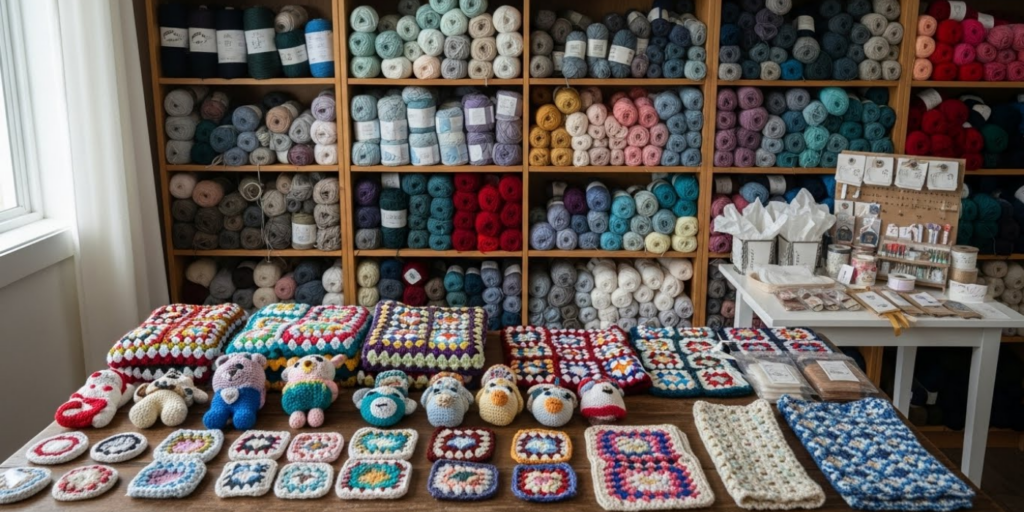
For crochet and knitting businesses—especially small-scale or solo operations—pricing directly impacts everything from daily morale to long-term growth. Underpricing might attract more initial sales, but it often leads to resentment, exhaustion, and financial instability. Conversely, overpricing without clear value justification can alienate potential customers in a market where buyers are savvy and comparison-shopping is effortless.
In many crochet businesses I’ve consulted with, the root issue isn’t lack of talent or product quality—it’s a fundamental misalignment between perceived value and actual cost structure. Handmade goods carry emotional, cultural, and artistic weight that mass-produced items don’t, yet makers frequently fail to communicate or monetize that difference effectively.
Fair pricing isn’t just ethical; it’s strategic. When you price your crochet items to reflect true costs—including labor, materials, platform fees, packaging, and even mental energy—you create a foundation for reinvestment, innovation, and customer trust. Buyers are more likely to support a transparent, professional brand that explains why a hand-crocheted baby blanket costs $120 versus a $25 big-box store alternative. They’re not just buying yarn—they’re buying hours of skilled work, unique design, and sustainable practices.
Moreover, fair pricing supports the entire handmade ecosystem. It sets industry standards, discourages race-to-the-bottom competition, and validates craft as legitimate work. As the handmade movement grows, so does the responsibility of each maker to price with integrity—not just for themselves, but for the community.
Why This Strategy Works Especially Well in the Crochet Community
The crochet community is uniquely positioned to benefit from intentional, fair pricing strategies. Unlike fast fashion or disposable decor, crochet items are inherently slow-made, tactile, and personal. Customers who seek out handmade crochet often do so because they value authenticity, customization, and connection—qualities that justify premium pricing when communicated well.
Experienced designers often recommend leaning into storytelling as part of your pricing narrative. A crocheted shawl isn’t just wool and time; it’s the story of the pattern you designed during a quiet winter, the organic merino sourced from ethical farms, or the custom color blend chosen with a client’s wedding palette in mind. These intangible elements add real value that can—and should—be reflected in your price.
Additionally, the crochet community thrives on education and mentorship. When established makers model fair pricing, they empower newcomers to avoid the “starving artist” trap. From working with multiple crochet brands, I’ve observed that shops with clear, confident pricing tend to attract higher-quality customers—those who respect craftsmanship and are willing to pay for durability, uniqueness, and care.
Finally, digital platforms like Instagram, TikTok, and Pinterest have made it easier than ever to showcase your process. Time-lapse videos of a complex lace shawl, reels showing yarn dye lots, or carousels breaking down your pricing formula build trust and justify your rates. The crochet audience is engaged, curious, and supportive—especially when they understand the effort behind the final product.
Materials, Tools, or Resources Needed
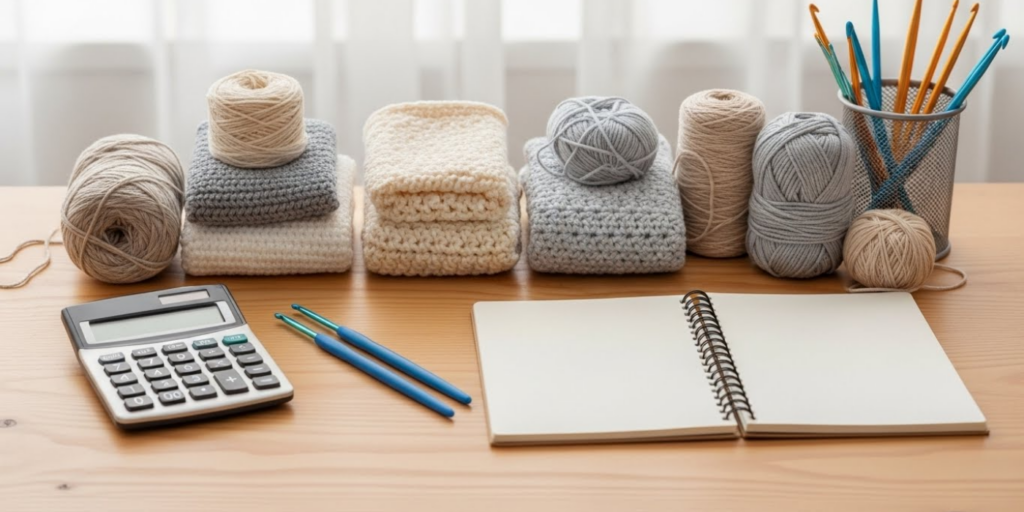
Before you can price your crochet items fairly, you need the right tools to track and calculate your costs accurately. Guesswork won’t cut it if you’re aiming for sustainability. Here’s what you’ll need:
- Spreadsheet software (Google Sheets, Excel, or dedicated apps like Craftybase or Marmalead): Essential for logging material costs, time spent, and overhead.
- Digital scale: To weigh yarn usage per project, especially important for partial skeins.
- Time-tracking app (e.g., Toggl, Clockify, or even a simple timer): Helps quantify labor hours realistically.
- Receipts or digital records of all material purchases: Keep detailed logs of yarn, notions, labels, and packaging.
- Calculator or pricing formula template: A reusable framework you can apply to every new item.
- Market research notes: Document competitor pricing for similar items (not to copy, but to understand positioning).
- Business expense tracker: Include platform fees (Etsy, PayPal), shipping supplies, website hosting, and marketing costs.
Don’t underestimate the power of consistency. Using the same tools across all products ensures your pricing remains objective and scalable. Many successful crochet entrepreneurs I’ve worked with review their pricing spreadsheet monthly, adjusting for yarn price fluctuations or changes in shipping rates.
Yarn Types and Fiber Considerations
The type of yarn you use significantly impacts your final price—and not just because of upfront cost. Different fibers carry different values in the eyes of consumers and require varying levels of care, which affects perceived worth.
For example:
- Cotton or acrylic blends ($3–$8 per skein): Affordable and durable, ideal for everyday items like dishcloths or baby blankets. While material costs are low, don’t let that trick you into undervaluing your labor.
- Merino wool or alpaca ($15–$30+ per skein): Premium natural fibers that feel luxurious and photograph beautifully. These justify higher price points, especially for garments or heirloom pieces.
- Hand-dyed or small-batch yarns ($25–$50+ per skein): Often sourced from indie dyers, these add exclusivity and artistic value. Customers paying for these expect—and accept—higher finished prices.
- Eco-friendly or certified organic yarns: These come with ethical premiums that resonate with conscious consumers. Highlighting certifications (GOTS, OEKO-TEX) can support a 10–20% price increase.
From working with multiple crochet brands, I’ve seen that transparency about fiber content builds trust. Include details like “100% Peruvian Highland Wool” or “OEKO-TEX Certified Cotton” in your product descriptions. Not only does this educate buyers, but it also reinforces why your $95 beanie is worth more than a $20 fast-fashion alternative.
Also consider yarn weight and yardage. A bulky-weight project may use fewer yards but take less time, while a fingering-weight lace shawl could consume 1,200+ yards and 20+ hours. Always calculate cost per yard used, not per skein purchased.
Skill Level Breakdown (Beginner / Intermediate / Advanced)
Your skill level directly influences how you should price your work—not because beginners “deserve less,” but because complexity, efficiency, and risk vary by experience.
Beginner
New crocheters often work slower and may make more mistakes (frogging = wasted time). However, this doesn’t mean pricing lower. Instead, focus on simpler designs that minimize risk and maximize consistency. A beginner’s market tote might take 6 hours, while an expert’s takes 3—but both should be priced to reflect actual time invested plus materials. Beginners should avoid complex garments until they’ve built speed and confidence.
Intermediate
At this stage, you’ve developed rhythm and can estimate time more accurately. You might experiment with colorwork, basic garment construction, or textured stitches. Pricing should now include a modest “skill premium”—not for ego, but because your reliability and finish quality have improved. For instance, a well-seamed amigurumi with embroidered details deserves more than a basic single-stitch version.
Advanced
Expert crocheters handle intricate lace, seamless construction, custom sizing, and original designs. Their work often includes problem-solving, pattern testing, and client consultation—all billable. Advanced makers should absolutely charge for design time, revisions, and expertise. A custom-fit wedding shawl with hand-dyed silk isn’t just a product; it’s a bespoke service.
Experienced designers often recommend tiered pricing: standard items (fixed price), semi-custom (small upcharge), and fully custom (hourly + materials). This respects your skill progression while offering options to different customer segments.
Step-by-Step Guide
Pricing crochet items fairly requires a systematic approach. Follow this detailed, battle-tested method:
Step 1: Calculate Material Costs
- Weigh your finished item (or unused yarn) to determine exact yarn used.
- Divide total skein cost by total yards, then multiply by yards used.
- Add costs for buttons, zippers, labels, stuffing, etc.
- Include packaging: mailers, tissue paper, thank-you cards.
Example:
- Skein: $12 for 200 yards
- Used: 150 yards → ($12 ÷ 200) × 150 = $9
- Buttons: $1.50
- Packaging: $0.75
- Total Materials: $11.25
Step 2: Track Labor Hours Accurately
- Use a timer from cast-on to final weave-in.
- Include design time (if original), swatching, and photography.
- Don’t forget admin: listing creation, customer messages, shipping prep.
Tip: Time yourself making the same item 3 times. Average the results for realism.
Step 3: Assign an Hourly Rate
This is where most makers falter. Ask: What do I need to earn per hour to sustain my business and life?
- Minimum: $15–$20/hour (U.S. living wage baseline)
- Realistic for skilled craft: $25–$40/hour
- Custom/bespoke work: $50+/hour
If you’re uncomfortable with high hourly rates, remember: you’re not just paid for stitching—you’re paid for years of practice, design intuition, and business management.
Step 4: Factor in Overhead
Overhead includes:
- Platform fees (Etsy: ~6.5% + payment processing)
- Website hosting ($10–$30/month)
- Marketing (ads, promotions)
- Shipping supplies
- Taxes (set aside 25–30% for self-employment tax)
Allocate a percentage (e.g., 10–15%) of your base price to cover these.
Step 5: Apply a Pricing Formula
Use one of these proven models:
Formula A (Cost-Based):
(Materials + (Labor Hours × Hourly Rate)) × (1 + Overhead %) = Base Price
Formula B (Keystone Markup):
(Materials + Labor Cost) × 2 = Wholesale
Wholesale × 2 = Retail
But caution: Keystone often fails for handmade because labor isn’t accounted for properly. Prefer Formula A.
Formula C (Value-Based for Custom Work):
Hourly Rate × Estimated Hours + Materials + 20% Buffer = Quote
Step 6: Research Market Positioning
Check 5–10 comparable sellers:
- Are they using similar yarns?
- Do they offer customization?
- What’s their brand aesthetic?
Don’t undercut competitors. Instead, differentiate through quality, story, or service. If your price is 20% higher, justify it clearly (“hand-dyed yarn,” “plastic-free packaging,” “includes personalized note”).
Step 7: Test and Adjust
Launch with your calculated price. After 10–20 sales, evaluate:
- Are items selling steadily?
- Are customers asking for discounts?
- Are you feeling resentful or exhausted?
If sales are slow but feedback is positive, your price may be fair—just needing better marketing. If you’re burning out, raise prices immediately.
Common Mistakes and How to Avoid Them
Even seasoned makers fall into pricing traps. Here are the most frequent errors—and how to sidestep them:
Mistake 1: Pricing Only by Yarn Cost
Many beginners multiply yarn cost by 2 or 3 and call it a day. This ignores labor entirely.
Fix: Always include time. Even a $5 dishcloth taking 2 hours at $20/hour = $45 minimum.
Mistake 2: Using “What Feels Right” Instead of Data
Emotional pricing leads to inconsistency. One week you charge $60 for a hat, the next $35.
Fix: Stick to your formula. Document every calculation.
Mistake 3: Ignoring Hidden Time
Photographing, listing, packaging, and customer service add 30–50% to project time.
Fix: Track all time, not just hook-in-hand hours.
Mistake 4: Fear of “Scaring Off” Customers
Underpricing attracts bargain hunters, not loyal fans.
Fix: Target customers who value craft. Use clear messaging: “Each piece is made by hand in my studio with ethically sourced materials.”
Mistake 5: Not Raising Prices Over Time
As your skills improve, your rates should too. Stagnant pricing = declining real income.
Fix: Increase prices by 5–10% annually, or after major skill milestones.
Mistake 6: Discounting Too Heavily
Sales train customers to wait, eroding perceived value.
Fix: Offer limited-time bundles (“Buy scarf + hat, save 10%”) instead of site-wide discounts.
Advanced Tips and Professional Insights
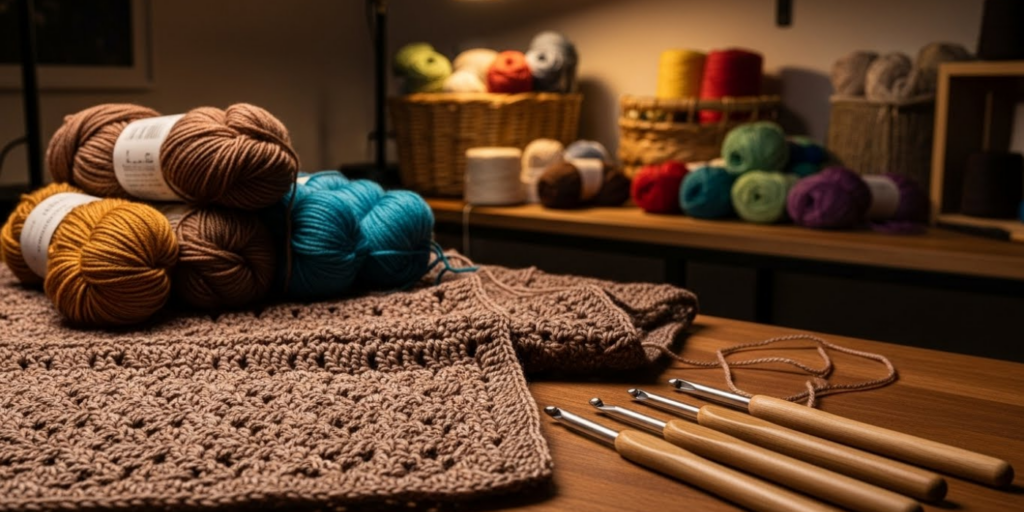
Beyond the basics, top-performing crochet businesses use these nuanced strategies:
Bundle Low-Margin Items with High-Value Ones
Sell a $120 shawl with a matching $25 headband. The headband’s margin improves because photography and listing time are shared.
Implement Tiered Pricing for Custom Work
- Standard: Fixed price, no changes
- Semi-Custom: +15% for color swaps
- Fully Custom: Hourly rate + materials deposit
This manages expectations and protects your time.
Use Psychological Pricing Thoughtfully
$89 feels more intentional than $90. But for luxury items, round numbers ($100) signal confidence.
Track Your “Profit Per Hour”
After a sale, calculate: (Revenue – All Costs) ÷ Total Hours. Aim for at least your target hourly rate. If consistently below, adjust pricing or streamline processes.
Offer Payment Plans for High-Ticket Items
A $300 wedding set feels more accessible split into 3 payments. Use platforms like PayPal Credit or Partial.ly.
Build Pricing Into Your Brand Story
On your About page, explain: “I price to ensure living wages, sustainable materials, and time for innovation.” Customers respect transparency.
From working with multiple crochet brands, I’ve found that makers who openly discuss pricing ethics often see higher conversion rates—because they filter for ideal clients.
Real-World or Hypothetical Examples
Let’s apply these principles to concrete scenarios.
Example 1: Beginner-Friendly Market Tote
- Materials: $8 (cotton yarn + wooden handles)
- Labor: 4 hours (slow due to learning curve)
- Hourly Rate: $18
- Overhead: 12%
- Calculation: ($8 + (4 × $18)) × 1.12 = ($8 + $72) × 1.12 = $89.60 → $90
Why it works: Honors the maker’s time while staying accessible. Clear description: “Handmade with 100% organic cotton—each tote takes 4+ hours to stitch.”
Example 2: Intermediate Lace Shawl
- Materials: $22 (hand-dyed merino)
- Labor: 12 hours
- Hourly Rate: $28
- Overhead: 15%
- Calculation: ($22 + (12 × $28)) × 1.15 = ($22 + $336) × 1.15 = $411.70 → $412
Positioning: Marketed as “heirloom quality,” with process photos showing blocking and finishing. Competitors charge $350–$450—this fits perfectly.
Example 3: Advanced Custom Baby Blanket
- Consultation: 1 hour
- Design/Swatching: 3 hours
- Crocheting: 18 hours
- Materials: $35 (organic cotton)
- Hourly Rate: $35
- Total Labor Cost: 22 × $35 = $770
- Final Price: $770 + $35 = $805
Client communication: “Your custom blanket includes 3 design revisions, premium yarn, and gift-ready packaging. Deposit: 50%.”
These examples show how fair pricing scales with skill and intention—without alienating buyers who understand the value.
Customization and Adaptation Ideas
Fair pricing doesn’t mean rigidity. Adapt your model to different contexts:
For Craft Fairs
- Add 10–15% to cover booth fees and travel time.
- Offer “fair-only” bundles (e.g., “Buy 2, get 10% off”).
For Subscription Boxes
- Price wholesale (typically 50% of retail) but require minimum order quantities.
- Include your brand card to drive direct traffic.
For Teaching Patterns vs. Finished Goods
- Patterns can be priced lower ($6–$12) since they’re digital and scalable.
- But finished items made from your pattern should still follow full pricing rules.
For Charity Collaborations
- Never work for “exposure.” Instead, donate a fixed number of items or offer a limited run where 20% of proceeds go to cause.
- This preserves your pricing integrity while supporting community.
Always ask: Does this adaptation still cover my true costs and reflect my worth? If not, renegotiate or decline.
Care, Maintenance, or Best Practices
Once priced fairly, maintain your business health with these practices:
- Review pricing quarterly: Adjust for yarn cost increases or new skill levels.
- Keep separate business accounts: Never mix personal and craft finances.
- Save for slow seasons: Set aside 10–15% of revenue for taxes and dry spells.
- Audit your time monthly: Eliminate low-value tasks (e.g., automate social posts).
- Say no to underpaid gigs: Protect your rate—even if it means fewer sales.
Also, educate your customers on care instructions. A $120 wool sweater lasts decades if hand-washed—but if ruined in a machine, they’ll blame you, not the label. Include a care card with every order.
Monetization Opportunities
Fair pricing opens doors beyond one-off sales:
Pattern Sales
Once you’ve perfected a design, sell the pattern digitally. Price based on complexity:
- Simple: $5–$7
- Intermediate: $7–$9
- Advanced: $9–$12
Kits
Bundle yarn, pattern, and notions. Price at 1.5x material cost + pattern value. Example: $40 kit for a $25 yarn + $8 pattern.
Workshops
Teach your signature technique. Charge $25–$50/hour for live classes or pre-recorded courses.
Commissioned Work
Offer custom design services at $50–$100/hour. Require 50% deposit.
Wholesale to Boutiques
Approach carefully. Ensure your wholesale price (typically 50% of retail) still covers costs. Many makers skip wholesale because margins vanish—but if you streamline production, it can work.
Remember: Diversification reduces reliance on any single income stream, making your business more resilient.
Frequently Asked Questions (FAQ)
How do I price crochet items if I’m just starting out?
Start by tracking every minute and material cost. Use a conservative hourly rate ($15–$20) and apply the formula: (Materials + (Hours × Rate)) × 1.15. Don’t undervalue your time just because you’re new—your learning process is part of the product’s story.
What’s a fair hourly rate for crochet work?
A fair rate ranges from $20 to $50+ per hour, depending on skill, location, and business expenses. Calculate your personal break-even: (Monthly Expenses ÷ Billable Hours) + Desired Profit. Most sustainable handmade businesses land between $25–$35/hour.
Should I charge more for custom orders?
Yes. Custom work involves extra time for communication, revisions, and unique problem-solving. Charge 20–50% more than your standard item, or switch to an hourly + materials model for complex requests.
How do I explain my prices to customers who think they’re too high?
Be transparent and proud. Say: “This piece uses ethically sourced merino wool and took 14 hours to create by hand. My pricing ensures I can continue making high-quality, sustainable goods.” Share your process on social media to build understanding.
Can I use the same price for identical items made with different yarns?
No. Always recalculate based on actual materials. A cotton version may cost less than a silk one—reflect that in pricing. Customers appreciate honesty about material differences.
How often should I raise my prices?
Increase prices by 5–10% annually, or whenever your costs rise significantly (e.g., yarn price hikes, new equipment). Also raise rates after completing advanced training or receiving consistent positive feedback. Notify repeat customers in advance as a courtesy.
Conclusion
Learning how to price crochet items fairly for profit and sustainability is not a one-time calculation—it’s an ongoing practice of self-respect, market awareness, and business discipline. When you honor your time, materials, and expertise with thoughtful pricing, you do more than earn a living; you elevate the entire handmade craft movement. Customers don’t just buy a product—they invest in a story, a skill, and a sustainable future for makers like you. Start today: open your spreadsheet, time your next project, and apply the formulas outlined here. Your future self—and your thriving crochet business—will thank you. Remember, fair pricing isn’t greedy; it’s the foundation of a legacy built stitch by stitch.
Emily Parker is a passionate crochet artist and creative storyteller. With years of experience turning simple yarn into beautiful, unique pieces, she loves sharing tips, tutorials, and inspiration with fellow crafters. Emily believes that crochet is more than a hobby it’s a way to express creativity, spread joy, and connect with people through handmade art.