Introduction
Choosing the right crochet hook isn’t just about picking up a tool—it’s about selecting the foundation of your entire project. Whether you’re crafting a delicate lace shawl or a chunky winter blanket, the crochet hook you use directly impacts your tension, stitch definition, comfort, and even the final drape of your fabric. Yet, despite its critical role, many crocheters—especially beginners—overlook the nuances of hook selection, defaulting to whatever’s available rather than what’s optimal.
This comprehensive guide dives deep into everything you need to know about crochet hooks: their materials, sizes, shapes, and how each variable influences your work. From ergonomic aluminum hooks that reduce hand fatigue during long sessions to ultra-fine steel hooks for intricate doilies, we’ll explore how to match the right tool to your yarn, pattern, and personal style. In many crochet businesses I’ve consulted for, simply upgrading or standardizing hook choices led to fewer customer complaints about inconsistent gauge and improved product quality.
Whether you’re a hobbyist looking to refine your technique or a handmade brand owner aiming to professionalize your output, understanding the subtleties of crochet hooks is non-negotiable. Let’s unravel the details so you can hook with confidence, precision, and joy.
What This Topic Means for Crochet & Knitting Businesses
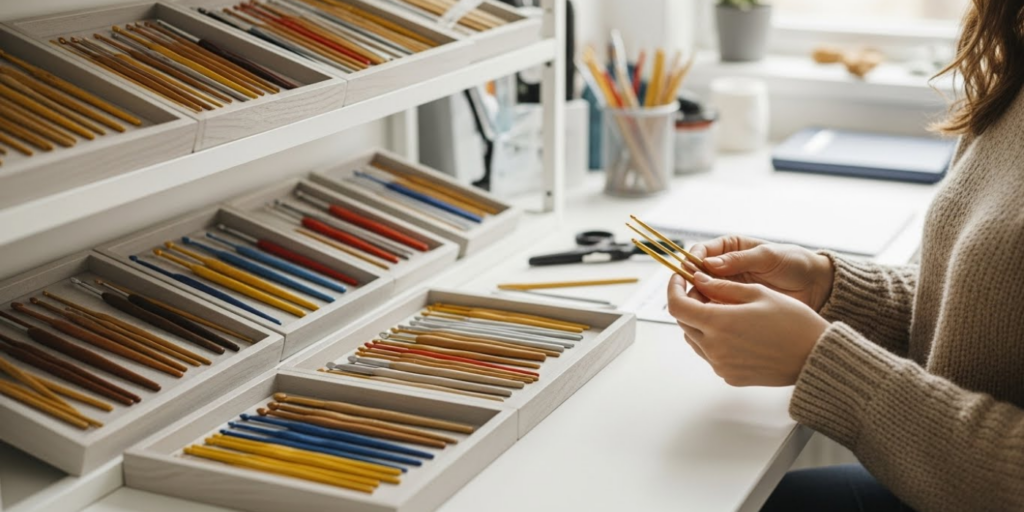
For handmade brands and small crochet enterprises, the choice of crochet hook transcends personal preference—it becomes a strategic business decision. Consistency in product quality hinges on using reliable, standardized tools. If you’re producing 50 identical baby blankets for an online shop, switching between a bamboo hook and a plastic one mid-batch can result in noticeable differences in stitch tightness and fabric density, leading to customer dissatisfaction and returns.
From working with multiple crochet brands over the past decade, I’ve observed that successful businesses often maintain a “hook protocol.” This means specifying exact hook types (e.g., “Clover Amour size H/5.0mm”) across all team members or production batches. This practice not only ensures uniformity but also streamlines training and troubleshooting. When a new crocheter joins the team, they’re handed the same tool used by veterans—eliminating guesswork and reducing errors.
Moreover, savvy sellers leverage their hook expertise as part of their brand story. Sharing behind-the-scenes content about why they chose a specific ergonomic hook for arthritis-friendly designs builds trust and positions them as knowledgeable artisans. In today’s handmade market, consumers don’t just buy products—they buy intentionality. Demonstrating thoughtful tool selection signals professionalism and care.
Why This Strategy Works Especially Well in the Crochet Community
The crochet community thrives on detail-oriented craftsmanship and shared learning. Unlike fast-fashion knitting trends that sometimes prioritize speed over precision, crocheters often engage deeply with technique, texture, and tool interaction. This makes the topic of crochet hooks particularly resonant.
Experienced designers often recommend experimenting with different hooks before committing to a pattern because the same yarn can yield dramatically different results based on hook material alone. For instance, a slippery nylon yarn might slide too easily on a metal hook, causing loose stitches, but grip beautifully on a slightly textured bamboo hook. The community values these nuanced insights, which is why detailed hook guides consistently perform well on blogs, YouTube, and Ravelry forums.
Additionally, the rise of ergonomic and sustainable hook options has sparked passionate discussions among crocheters seeking both comfort and eco-consciousness. Brands that align with these values—offering recycled aluminum hooks or FSC-certified wood handles—find loyal followings. Understanding and articulating the “why” behind hook choices allows creators to connect authentically with their audience, fostering engagement and repeat customers.
Materials, Tools, or Resources Needed
Before diving into techniques, let’s clarify the essential materials and tools involved in selecting and using crochet hooks effectively:
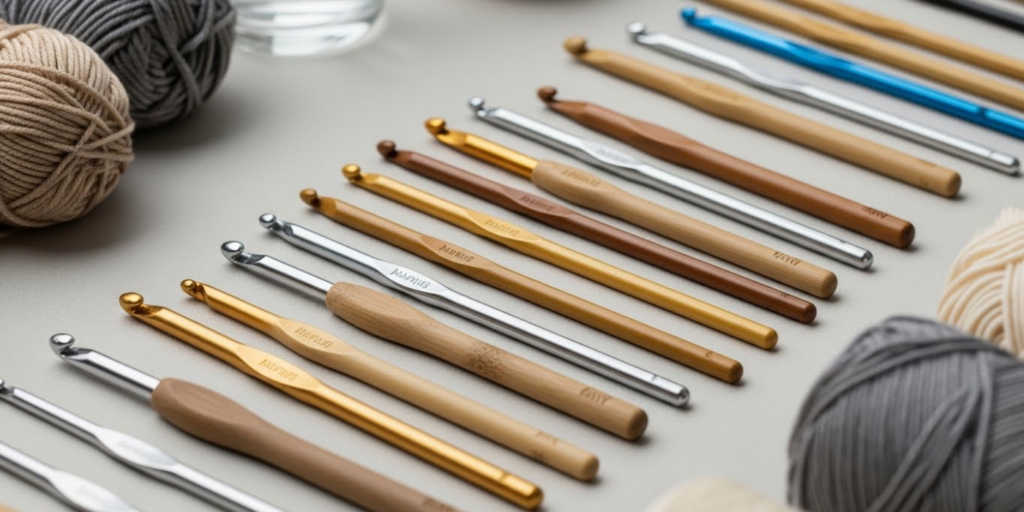
- Crochet hooks in various materials (aluminum, bamboo, steel, plastic, wood, ergonomic composite)
- Yarn swatches for testing hook performance
- Tape measure or ruler for gauge verification
- Stitch markers (optional but helpful for tracking rows during testing)
- Hook organizer or case to prevent damage and loss
- Digital scale (for advanced users comparing yarn consumption across hooks)
- Notebook or digital log to record hook-yarn combinations and outcomes
Having these resources on hand enables systematic experimentation. For example, when developing a new pattern, I always create a “hook matrix”: a grid where I test the same yarn with 3–5 different hook types in the same size. This reveals subtle differences in drape, stitch height, and hand fatigue—data that informs both my design choices and my recommendations to customers.
Yarn Types and Fiber Considerations
The interplay between yarn fiber and hook material is one of the most overlooked yet impactful aspects of crochet. Not all hooks behave the same way with every yarn type. Here’s how common fibers respond to different hook materials:
Cotton & Linen
These plant-based fibers are smooth and inelastic. They benefit from smooth metal or aluminum hooks that allow stitches to glide without snagging. Bamboo hooks can sometimes catch on the short fibers, causing uneven tension. For fine cotton thread (size 10 or smaller), steel hooks are ideal due to their rigidity and precision.
Wool & Animal Fibers
Wool has natural grip and elasticity. It works beautifully with bamboo or wooden hooks, which provide slight friction to prevent stitches from slipping off. However, if you’re working with superwash wool (which is smoother), a matte-finish aluminum hook may offer better control.
Acrylic & Synthetic Blends
Synthetics are often slippery. A textured or rubberized ergonomic hook can help maintain consistent tension. Avoid overly polished metal hooks unless you have a very firm grip.
Silk & Luxury Blends
Delicate fibers like silk require gentle handling. Smooth, warm-to-the-touch materials like bamboo or birch minimize abrasion. Steel hooks, while precise, can be too harsh for repeated use on fine silk blends.
In many crochet businesses that specialize in garment-making, matching hook material to yarn fiber is part of their quality control checklist. One designer I collaborated with exclusively uses tulip-handled bamboo hooks for her merino wool cardigans because they “feel like an extension of her fingers”—a tactile harmony that translates into flawless seams and even stitches.
Skill Level Breakdown
Beginner
New crocheters should prioritize comfort and visibility. A medium-sized (5.0mm–6.0mm) aluminum or ergonomic hook with a soft grip is ideal. These materials are affordable, widely available, and forgiving. Beginners often struggle with tension; a slightly grippy handle helps stabilize the hook without straining the wrist. Avoid steel hooks at this stage—they’re too small and rigid for learning basic stitches.
Intermediate
At this level, crocheters begin exploring different projects (amigurumi, garments, home decor) and notice how hook choice affects outcomes. Experimentation is key. Try bamboo for textured blankets, aluminum for lacy shawls, and ergonomic hooks for large projects. Intermediate makers should also learn to read hook sizing charts (metric vs. US vs. UK) to avoid confusion when following international patterns.
Advanced
Seasoned crocheters treat hooks as precision instruments. They curate collections based on project needs: tapered steel hooks for thread crochet, inline hooks for Tunisian work, jumbo hooks for arm-knitting hybrids. Many develop strong preferences—some swear by Clover Amour for its seamless join, others favor Tulip Etimo for its balance. Advanced users also understand how hook shape (inline vs. tapered) influences stitch formation and gauge consistency.
Step-by-Step Guide to Choosing and Using the Right Crochet Hook
Selecting the perfect hook isn’t guesswork—it’s a methodical process. Follow these steps to optimize your tool choice for any project.
Step 1: Decode the Pattern Requirements
Start with the pattern’s recommended hook size. But remember: this is a starting point, not a rule. Note whether it specifies metric (e.g., 4.0mm) or US letter sizing (e.g., G-6). Keep a conversion chart handy—many discrepancies arise from misreading sizes.
Step 2: Match Hook Material to Yarn Fiber
Refer to the “Yarn Types and Fiber Considerations” section above. If your yarn is slippery acrylic, skip polished aluminum. If it’s rustic wool, avoid cold steel.
Step 3: Consider Project Scale and Duration
For a quick coaster? Any decent hook will do. For a queen-sized blanket you’ll work on for months? Invest in an ergonomic hook with a cushioned handle. Your hands will thank you.
Step 4: Test Multiple Hooks in the Same Size
Buy or borrow 2–3 hooks in the recommended size but different materials. Make a 4″x4″ swatch with each. Compare:
- Stitch definition
- Fabric drape
- Hand fatigue after 10 minutes
- Ease of inserting hook into stitches
Step 5: Check Gauge Rigorously
Measure your swatch. If you’re off-gauge, adjust hook size before changing material. Only if gauge is correct but fabric feels “wrong” should you switch materials.
Step 6: Evaluate the Hook’s Construction
Inspect the throat (where the shaft meets the handle). A smooth transition prevents yarn splitting. Ensure the hook head isn’t too sharp (can snag) or too blunt (hard to insert).
Step 7: Commit and Document
Once you’ve chosen, stick with that hook for the entire project. Record your choice in your project notes: “Used Clover Amour 5.5mm with Cascade 220.” This builds your personal knowledge base for future reference.
Common Mistakes and How to Avoid Them
Even experienced crocheters fall into these traps:
Mistake 1: Assuming All Hooks in the Same Size Are Equal
A 5.0mm hook from Brand A may have a slightly wider shaft than Brand B due to manufacturing tolerances. Always swatch.
Fix: Buy hooks from reputable brands known for consistency (Clover, Tulip, Boye, Susan Bates).
Mistake 2: Ignoring Ergonomics Until Pain Sets In
Many crocheters power through wrist pain, thinking it’s normal. It’s not.
Fix: If you crochet more than 2 hours weekly, invest in an ergonomic hook. Look for contoured handles with non-slip grips.
Mistake 3: Using Worn or Damaged Hooks
Chips, bends, or rough spots on a hook can snag yarn or distort stitches.
Fix: Inspect hooks monthly. Replace any with visible wear. Store them in a padded case.
Mistake 4: Overlooking Hook Shape (Inline vs. Tapered)
Inline hooks (like Susan Bates) have a straighter throat, creating taller stitches. Tapered hooks (like Boye) produce shorter, denser fabric. Switching between them without adjusting can ruin gauge.
Fix: Know your preferred style and stick to it unless a pattern specifically recommends otherwise.
Mistake 5: Buying Cheap Hooks for Delicate Work
Dollar-store plastic hooks lack precision for lace or thread crochet.
Fix: Reserve budget hooks for bulky yarns or practice. Use high-quality steel hooks for fine work.
Advanced Tips and Professional Insights
After years of designing and teaching, here are nuanced strategies professionals use:
Tip 1: Use Two Hooks for Colorwork
When working tapestry crochet or intarsia, hold the main color on your standard hook and keep the contrast color on a second, identical hook. This reduces yarn twisting and speeds up color changes.
Tip 2: Warm Your Hook for Slippery Yarns
Place a metal hook in your pocket for a few minutes before starting. Body heat slightly increases surface friction, helping grip slick fibers like bamboo or silk.
Tip 3: Modify Hook Handles for Custom Comfort
Wrap the handle of a standard hook with heat-shrink tubing or medical tape to create a personalized grip. Many artisans do this for long-term projects.
Tip 4: Understand Hook Flexibility
Longer hooks (like those for jumbo yarn) have more flex. For stiff fabrics (e.g., market bags), use a rigid hook to maintain structure. For drapey fabrics, slight flex can enhance fluidity.
Tip 5: Leverage Hook Weight for Rhythm
Heavier hooks (wood, thick aluminum) create a pendulum-like motion that can improve stitch consistency in repetitive patterns. Lighter hooks (plastic, thin steel) suit quick, small projects.
Experienced designers often recommend keeping a “hook journal” where you note which combinations worked best for specific effects—e.g., “Bamboo 4.5mm + linen = perfect summer top drape.”
Real-World or Hypothetical Examples
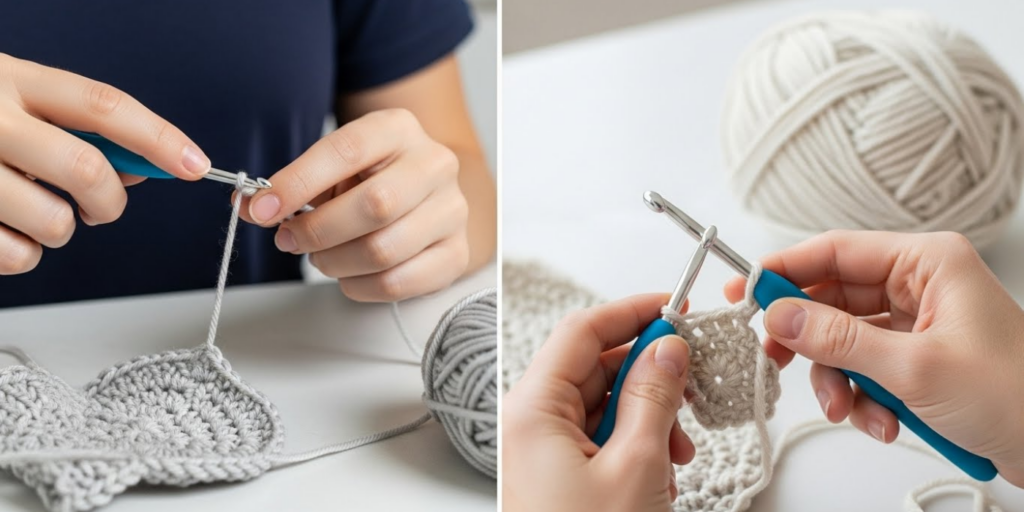
Consider “Luna’s Handmade,” a small Etsy shop specializing in organic cotton baby items. Initially, Luna used random aluminum hooks she’d collected over years. Customers occasionally complained that onesies stretched out after washing. After consulting a crochet technician, she switched to Clover Soft Touch hooks in size 3.5mm for all cotton projects. The slightly grippier surface created tighter, more resilient stitches. Returns dropped by 70%, and she now mentions her hook choice in product descriptions—a subtle trust signal.
Another example: Marco, a designer known for geometric afghans, struggled with inconsistent block sizes. He discovered his tapered Boye hooks produced shorter stitches than the inline hooks used by his test crocheters. By standardizing on Susan Bates Silvalume hooks across his team, his patterns achieved near-perfect block alignment, earning rave reviews for accuracy.
In a hypothetical scenario, imagine launching a luxury line of alpaca wraps. You’d likely choose hand-turned birch hooks not just for performance but for storytelling—highlighting the artisanal synergy between natural fiber and natural tool in your marketing.
Customization and Adaptation Ideas
Your hook doesn’t have to be static. Here’s how to adapt it:
- Add Grip: Wrap the handle with cork tape, rubber O-rings, or even Sugru moldable glue for custom contours.
- Color-Code: Paint hook handles with nail polish to match yarn weights (e.g., red for worsted, blue for DK).
- Extend Length: For extra-large hooks, attach a wooden dowel to the end for better leverage.
- Create a Travel Set: Drill holes in a wooden block to hold your most-used hooks upright on your desk.
- Modify the Head: Gently sand a too-sharp hook tip with fine-grit paper (use caution—this is irreversible).
Many crochet entrepreneurs sell customized hook sets as add-ons to pattern purchases, enhancing perceived value.
Care, Maintenance, or Best Practices
Proper hook care extends lifespan and ensures consistent performance:
- Clean Regularly: Wipe metal hooks with a dry cloth after use. For deep cleaning, use mild soap and water; dry immediately to prevent oxidation.
- Store Properly: Keep hooks in a fabric roll or compartmentalized case. Avoid tossing them loose in a bag where they can scratch or bend.
- Avoid Extreme Temperatures: Don’t leave hooks in hot cars—bamboo can crack, plastic can warp.
- Check for Wear Monthly: Run your finger along the shaft. Any roughness? Retire it.
- Rotate Usage: If you have multiples of the same size, rotate them to prevent overuse wear on one.
For steel hooks used with thread, a quick dip in rubbing alcohol removes residue that can discolor light-colored yarns.
Monetization Opportunities
Understanding crochet hooks opens several educational and product-based revenue streams:
- Create a Hook Comparison Guide PDF as a lead magnet for your email list.
- Host a Workshop: “Mastering Hook Selection for Perfect Gauge” appeals to intermediate crocheters.
- Curate a Hook Starter Kit for beginners, bundling 5 essential hooks with a printed guide.
- Offer Pattern Testing Services where you verify hook compatibility for designers.
- Write Sponsored Content reviewing new ergonomic hooks (disclose partnerships transparently).
- Develop a Hook Sizing App that converts between US, UK, and metric systems with visual references.
One successful creator built a $10K/month business selling “Hook Harmony Kits”—pre-matched hook-and-yarn sets for popular indie dyers. Her expertise in tool-fiber pairing became her unique selling proposition.
Frequently Asked Questions (FAQ)
What is the most common crochet hook size?
The most commonly used size is 5.0mm (H-8), ideal for worsted-weight yarn. It’s versatile for blankets, garments, and accessories.
Are expensive crochet hooks worth it?
Yes, for frequent crocheters. Premium hooks (e.g., Clover, Tulip) offer superior balance, smooth joins, and ergonomic designs that reduce fatigue and improve stitch consistency. Budget hooks are fine for occasional use or bulky yarns.
What’s the difference between inline and tapered crochet hooks?
Inline hooks (like Susan Bates) have a straighter throat and deeper groove, creating taller, looser stitches. Tapered hooks (like Boye) have a gradual slope, yielding shorter, tighter stitches. Gauge can differ by 10–15% between styles.
Can I use a knitting needle as a crochet hook?
No. Knitting needles lack the hooked end needed to pull loops through stitches. Attempting this will damage both the needle and your project.
How do I know what hook size to use with a yarn?
Check the yarn label for a recommended hook size. Then, make a gauge swatch. Adjust the hook size up or down until your stitches match the pattern’s specified gauge.
Are bamboo crochet hooks better than metal?
It depends on your yarn and preference. Bamboo offers warmth and slight grip, ideal for wool or slippery yarns. Metal provides speed and smoothness, better for cotton or tight stitches. Neither is universally “better.”
Conclusion
Mastering the world of crochet hooks—their materials, sizes, and shapes—isn’t just a technical skill; it’s a gateway to elevated craftsmanship, business consistency, and creative confidence. The right hook transforms frustrating tension issues into rhythmic flow, turns inconsistent swatches into reliable gauge, and elevates handmade goods from “nice” to “professional.”
As you move forward, remember: your hook is your primary interface with the yarn. Treat it with the same intentionality you give to fiber selection or pattern design. Experiment mindfully, document your findings, and don’t hesitate to invest in tools that honor your time and talent.
Whether you’re stitching a gift for a loved one or building a handmade brand, the details matter. And in crochet, few details matter more than the humble hook in your hand. Happy hooking!

Emily Parker is a passionate crochet artist and creative storyteller. With years of experience turning simple yarn into beautiful, unique pieces, she loves sharing tips, tutorials, and inspiration with fellow crafters. Emily believes that crochet is more than a hobby it’s a way to express creativity, spread joy, and connect with people through handmade art.