Introduction
Choosing the right yarn might seem straightforward—after all, it’s just string, right? But anyone who’s spent hours unraveling a project because the yarn bled color, stretched beyond recognition, or simply didn’t match the pattern’s requirements knows better. Common mistakes when buying yarn can derail even the most meticulously planned knitting or crochet project, wasting time, money, and creative energy. Whether you’re crafting a cozy blanket for a newborn or developing a product line for your handmade business, selecting yarn isn’t just about color or softness—it’s about fiber content, weight, dye lot consistency, yardage accuracy, and how the material behaves after washing. In this comprehensive guide, we’ll explore the most frequent errors crafters make when purchasing yarn and, more importantly, how to avoid them with confidence. Drawing on years of experience working with independent designers, small-batch dyers, and global fiber suppliers, this article delivers actionable insights that protect your projects—and your profits.
What This Topic Means for Crochet & Knitting Businesses
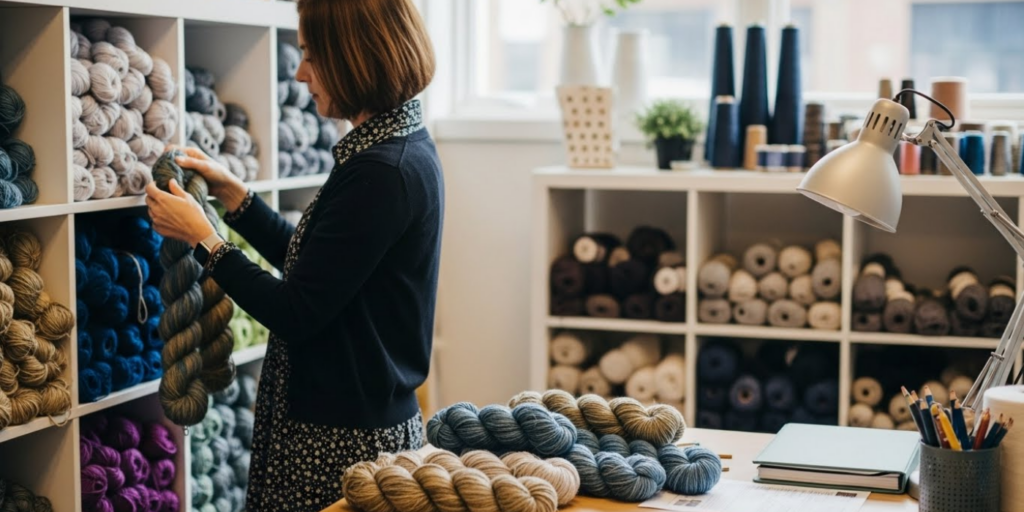
For handmade entrepreneurs, yarn isn’t just a material—it’s inventory, branding, and customer satisfaction rolled into one skein. A single poor yarn choice can lead to returns, negative reviews, or worse: damaged reputation. In many crochet businesses I’ve consulted for, inconsistent yarn sourcing was the hidden culprit behind delayed launches and frustrated customers. Imagine selling 50 hand-knit beanies only to discover mid-production that the dye lot changed subtly between batches, leaving half the hats mismatched. Or launching a luxury baby blanket line with a “superwash merino” that pills after one gentle wash—your brand takes the hit, not the supplier.
Experienced designers often recommend building relationships with 2–3 trusted yarn vendors rather than chasing the cheapest option online. From working with multiple crochet brands across North America and Europe, I’ve seen firsthand how strategic yarn selection directly impacts profit margins, production timelines, and customer loyalty. Choosing yarn wisely isn’t just a creative decision; it’s a business strategy.
Why This Strategy Works Especially Well in the Crochet Community
The crochet and knitting communities are uniquely detail-oriented and quality-conscious. Unlike mass-market fashion consumers, handmade enthusiasts value transparency, sustainability, and tactile authenticity. They’ll pay more for yarn that feels right, washes well, and tells a story—whether it’s from a family-run mill in Peru or a woman-owned indie dye studio in Oregon.
This cultural nuance means that avoiding common yarn-buying mistakes isn’t just about technical correctness—it’s about aligning with your audience’s values. When you select yarn thoughtfully, you signal professionalism and care. Your customers notice when a scarf doesn’t shed fibers onto their black coat or when a market bag holds its shape after months of use. These subtle wins build trust and repeat business.
Moreover, the rise of social media has made visual consistency crucial. A photo of your finished product must look identical to what buyers receive weeks later. That’s impossible without strict control over yarn variables like twist direction, plies, and dye saturation—all factors easily overlooked by beginners but mastered by seasoned makers.
Materials, Tools, or Resources Needed
Before you even click “Add to Cart” on that gorgeous skein, gather these essential tools and resources:
- Yarn Wraps or Swifts: For measuring wraps per inch (WPI), which helps verify yarn weight independently of labels.
- Digital Scale: To confirm actual grams or ounces, especially important when substituting yarns.
- Swatch Notebook: A physical or digital log where you record fiber content, gauge, drape, and wash results for every yarn tested.
- Color Cards or Physical Samples: Many reputable brands (like Cascade, Malabrigo, or Lion Brand) offer mini-skeins or color cards so you can see true hues under natural light.
- Fiber Identification Kit (optional but useful): Includes burn test materials and magnifiers for verifying unknown fibers—critical if sourcing vintage or unlabeled yarn.
- Project Planner Template: A simple spreadsheet tracking pattern requirements vs. yarn specs (yardage, weight, needle size).
Having these on hand transforms yarn shopping from guesswork into a precise, repeatable process.
Yarn Types and Fiber Considerations
Understanding fiber composition is non-negotiable. Each material behaves differently, and substituting without consideration leads to disaster.
Natural Fibers
- Wool: Elastic, warm, and resilient—but can felt if agitated in hot water. Superwash wool is treated to prevent felting but may lack bounce.
- Cotton: Absorbent and breathable but has little memory; garments stretch over time. Ideal for dishcloths, summer tops, not structured bags.
- Linen/Hemp: Strong and gets softer with washing, but stiff at first and hard on hands during long sessions.
- Silk: Luxurious drape and sheen, but slippery and expensive. Best blended for durability.
Synthetics
- Acrylic: Affordable and colorfast, but prone to pilling and static. Modern premium acrylics (like Berroco Vintage) mimic wool beautifully.
- Nylon: Adds strength—common in sock yarn blends.
- Polyester: Often used in novelty yarns; avoid for skin-contact items due to poor breathability.
Blends
Most commercial yarns are blends (e.g., 80% merino/20% nylon). The ratio matters: 70/30 cotton/acrylic offers drape without excessive stretch; 50/50 wool/acrylic balances cost and performance.
Experienced designers often recommend swatching in the exact blend you plan to use—even within the same brand, different lines behave uniquely. A “worsted weight” from one company may knit up looser than another’s due to twist or ply structure.
Skill Level Breakdown
Beginner
New crafters often prioritize softness and price over function. While understandable, this leads to frustration when projects don’t turn out as expected. Beginners should stick to medium-weight (worsted or DK), solid-color, 100% acrylic or superwash wool yarns. These are forgiving, widely available, and easy to frog (undo). Avoid fuzzy, slippery, or variegated yarns until you’ve mastered tension control.
Intermediate
At this stage, you’re ready to experiment with fiber types and textures. Try cotton for home goods, wool blends for wearables, and simple hand-dyed skeins. Learn to read yarn labels critically: check for meterage variance, recommended needle size, and care symbols. Always buy an extra skein—dye lots matter more than you think.
Advanced
Seasoned makers understand that yarn is part of the design process, not just a supply. You’ll source specific fibers for drape (silk blends), stitch definition (high-twist wools), or eco-credentials (GOTS-certified organic cotton). You may even custom-order bases from indie dyers. Your mistake-avoidance strategy includes pre-washing samples, testing colorfastness, and maintaining detailed vendor records.
Step-by-Step Guide: How to Buy Yarn Without Regret
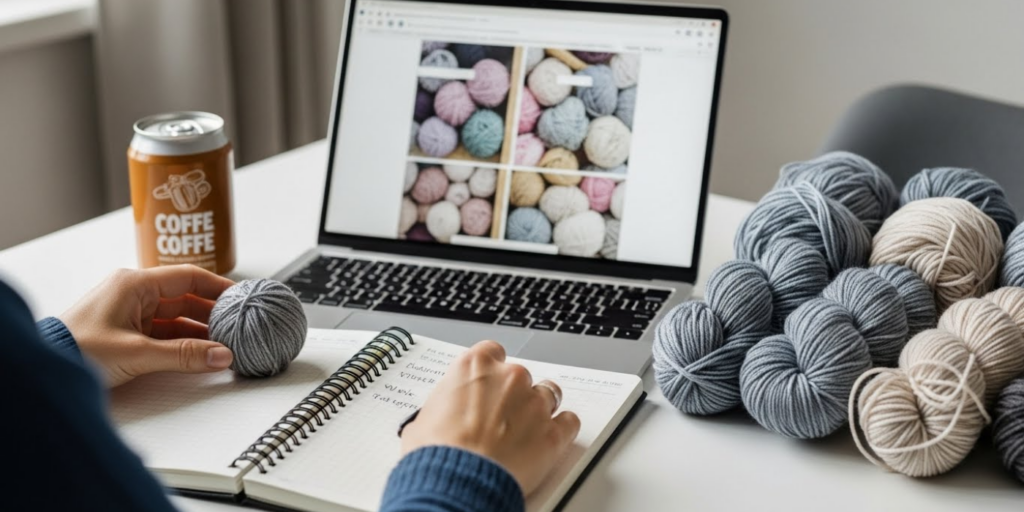
Follow this meticulous process every time you purchase yarn—whether for a personal project or wholesale inventory.
Step 1: Decode the Pattern Requirements
Don’t just note “worsted weight.” Check:
- Exact yardage needed (add 10–15% buffer)
- Recommended needle/hook size
- Gauge (stitches per inch)
- Fiber suggestions (e.g., “non-pilling acrylic”)
Step 2: Verify Yarn Weight Independently
Labels can be misleading. Use the WPI method:
- Wrap yarn snugly around a ruler for 1 inch.
- Count wraps:
- Lace: 16+
- Fingering: 14–15
- Sport: 12–13
- DK: 11–12
- Worsted: 9–11
- Bulky: 7–8
If your yarn falls outside the pattern’s range, recalculate gauge or choose another.
Step 3: Check Dye Lot and Dye Method
- Dye Lot: A batch number ensuring color consistency. Never mix lots unless unavoidable (and then, alternate rows).
- Dye Type: Commercial (consistent) vs. hand-dyed (unique variations). Semi-solid hand-dyes can pool unexpectedly—research the dyer’s technique.
Step 4: Calculate True Yardage Cost
Price per skein is deceptive. Compare cost per yard:
Example:
- Yarn A: $10 for 200 yards = $0.05/yard
- Yarn B: $12 for 300 yards = $0.04/yard
Yarn B is cheaper per yard despite higher sticker price.
Step 5: Swatch and Wash Test
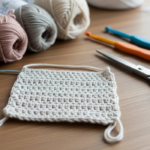
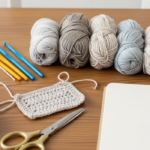
Knit/crochet a 6″x6″ swatch. Wash it exactly as you’ll treat the finished item. Measure shrinkage, color bleed, and texture change. If it distorts, reconsider.
Step 6: Assess Vendor Reliability
For businesses: Order samples first. Ask about:
- Minimum order quantities (MOQs)
- Lead times
- Return policies for defective stock
- Certifications (Oeko-Tex, GOTS)
Step 7: Document Everything
Log in your swatch notebook:
- Brand, line, color name, lot #
- Actual gauge vs. label
- Post-wash behavior
- Customer feedback (if sold)
This system prevents repeating costly errors.
Common Mistakes and How to Avoid Them
Let’s dissect the most frequent mistakes when buying yarn—and how to sidestep them with precision.
Mistake 1: Ignoring Yardage Requirements
Many crafters buy based on skein count (“the pattern says 5 skeins”) without checking actual yardage. Different brands package varying lengths in the same weight class.
Fix: Always calculate total yards needed. If substituting, ensure your chosen yarn meets or exceeds that total.
Mistake 2: Assuming “Worsted Weight” Is Universal
“Worsted” is a category, not a standard. One brand’s worsted may knit at 4 sts/inch, another at 5.
Fix: Swatch with your needles/hooks. Adjust needle size if gauge is off—don’t force the yarn to conform.
Mistake 3: Overlooking Fiber Behavior
Using 100% cotton for a fitted sweater? It will stretch irreversibly. Choosing mohair for amigurumi? It obscures stitch definition.
Fix: Match fiber to project function. Need structure? Wool or acrylic. Need drape? Silk or bamboo blends.
Mistake 4: Skipping the Dye Lot Check
Even slight color shifts ruin seamless garments. I once saw a bridal shawl abandoned because two “ivory” skeins had undertones of pink vs. yellow.
Fix: Buy all skeins from the same dye lot. If unavailable, contact the dyer—they may dye a custom batch.
Mistake 5: Falling for “Too Good to Be True” Deals
$2/skein luxury cashmere? Likely mislabeled or low-grade. Cheap yarn often uses short fibers that pill quickly.
Fix: Research the brand. Read reviews. If it’s an unknown seller on a marketplace, request fiber content documentation.
Mistake 6: Not Considering Care Instructions
Hand-wash-only yarn for a toddler’s blanket? Unrealistic. Machine-washable claims vary—some “superwash” wools still felt in top-loading machines.
Fix: Choose care-friendly fibers for high-use items. Test wash a swatch aggressively.
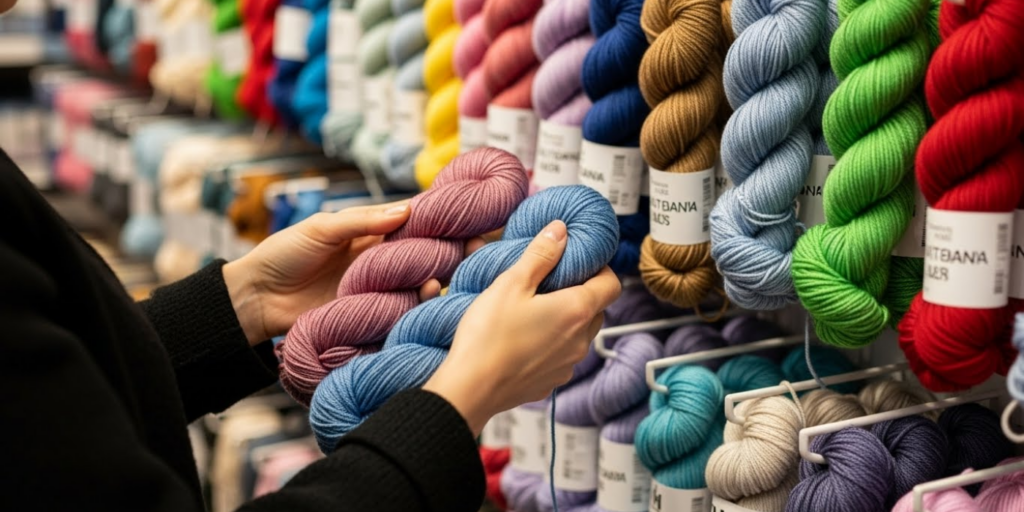
Mistake 7: Buying Online Without Physical Reference
Screens distort color. A “sage green” may arrive neon. Texture is invisible digitally.
Fix: Order physical samples or buy from retailers with generous return policies. Build a personal color library over time.
Advanced Tips and Professional Insights
Go beyond basics with these industry-tested strategies:
Batch Testing for Businesses
When scaling production, test every new dye lot—not just the first. Natural fibers vary seasonally; sheep fleece differs by shearing time. Re-swatch each batch.
Yarn Substitution Matrix
Create a spreadsheet comparing your go-to yarns across:
- Yardage per 100g
- Ply count
- Twist direction (S or Z)
- Fiber elasticity
This lets you swap intelligently when a line is discontinued.
Negotiate with Indie Dyers
Many small dyers offer wholesale discounts or custom colors for bulk orders. Propose collaboration: you promote their yarn in your patterns; they give you priority access.
Understand Twist Direction
Yarn spun with an S-twist vs. Z-twist affects stitch slant and fabric bias. Mixing directions in one project causes curling. Stick to one twist type per garment.
Track Climate Impact
Humidity affects natural fibers. Store yarn in climate-controlled spaces. In tropical regions, consider synthetics to avoid mildew.
From working with multiple crochet brands, I’ve learned that the most successful makers treat yarn as a dynamic variable—not a static input. They anticipate how it will age, wash, and wear.
Real-World or Hypothetical Examples
Case Study 1: The Failed Market Launch
A small business launched a line of crocheted market bags using a beautiful but loosely spun cotton. Within weeks, customers reported handles stretching and bottoms sagging. The fix? Switching to a tightly plied cotton/linen blend with reinforced stitching. Lesson: Structure matters as much as aesthetics.
Case Study 2: The Dye Lot Disaster
A knitter made a Fair Isle sweater using two “natural white” skeins from different lots. Photos showed a visible seam where tones clashed. Solution: Alternate skeins every two rows—a pro technique that blends variations seamlessly.
Hypothetical Scenario: Scaling Responsibly
Imagine you sell 200 baby blankets yearly. Instead of buying retail skeins, partner with a mill to produce your custom worsted-weight organic cotton blend. You control fiber length (reducing pilling), color consistency, and cost—while marketing “exclusive yarn” as a USP.
These examples prove that foresight in yarn selection prevents downstream headaches.
Customization and Adaptation Ideas
Make yarn work for your unique vision:
- Blend Yarns: Combine a sturdy base (like Cascade 220) with a sparkly thread for holiday pieces. Ensure similar care instructions.
- Overdye: Refresh leftover yarn with natural dyes (onion skins, avocado pits) for one-of-a-kind results.
- Re-spin: Unravel thrifted sweaters, wash, and re-skein for sustainable projects. Test for felting first.
- Texture Mixing: Pair smooth DK with a bouclé accent yarn—but limit bouclé to borders to maintain stitch clarity.
Always document adaptations so you can replicate successes.
Care, Maintenance, or Best Practices
Proper yarn handling extends its life and ensures project integrity:
- Storage: Keep in breathable cotton bags, away from direct sunlight. Avoid plastic—it traps moisture.
- Pre-Washing: For critical projects (wedding garments, baby items), pre-wash all skeins together to check bleeding and shrinkage.
- Labeling: Tag leftover yarn with project name, date, and dye lot. Use QR codes linking to digital notes.
- Rotation: Use older stock first. Natural fibers degrade over time; synthetics last decades but attract dust.
In my studio, we audit yarn inventory quarterly—discarding anything brittle, moth-eaten, or unidentifiable.
Monetization Opportunities
Smart yarn choices open revenue streams:
- Pattern Design: Create patterns specifically for popular, accessible yarns (e.g., “Made for Lion Brand Feels Like Butta”). Designers report higher sales when patterns use widely available materials.
- Yarn Curation Boxes: Offer themed kits (e.g., “Coastal Tones DK Bundle”) with matching patterns. Include care guides and swatch cards.
- Workshops: Teach “Yarn Literacy” classes—how to read labels, substitute fibers, avoid common pitfalls. Charge $25–$50/person.
- Consulting: Advise other makers on yarn sourcing for their product lines. Position yourself as the “yarn whisperer.”
Educational content builds authority while generating income—without hard selling.
Frequently Asked Questions (FAQ)
What’s the biggest mistake beginners make when buying yarn?
Assuming all yarns labeled “worsted weight” are interchangeable. Always swatch to confirm gauge and drape.
How do I know if a yarn will bleed color?
Soak a small piece in warm, soapy water for 30 minutes. If the water discolors, pre-wash the entire skein before use.
Can I mix different yarn brands in one project?
Only if they match in weight, fiber, care, and dye lot. Even then, swatch together first—different twists can cause puckering.
Why does my yarn keep splitting while crocheting?
Low-twist or loosely spun yarns fray easily. Use a blunt-tipped hook and work slowly. Avoid pulling too hard on the working yarn.
Is expensive yarn always better?
Not necessarily. Premium yarns offer luxury feel and ethical sourcing, but many budget lines (like Paintbox or Red Heart Soft) perform excellently for everyday items. Match yarn quality to project purpose.
How much extra yarn should I buy for a project?
For solid colors: 10–15% extra. For complex colorwork or hand-dyed variegated: 20–25%. Dye lots and tension variations demand buffers.
Conclusion
Avoiding common mistakes when buying yarn isn’t about perfection—it’s about informed intention. Every skein carries hidden variables: fiber integrity, twist tension, dye chemistry, and environmental impact. By approaching yarn selection with the rigor of a scientist and the intuition of an artist, you protect your time, elevate your craftsmanship, and build trust with your audience. Whether you’re making a gift for a friend or scaling a handmade empire, the principles remain the same: swatch relentlessly, document meticulously, and never underestimate the power of a well-chosen strand. Start applying these strategies today, and watch your projects—and your business—thrive with confidence. Happy stitching!

Emily Parker is a passionate crochet artist and creative storyteller. With years of experience turning simple yarn into beautiful, unique pieces, she loves sharing tips, tutorials, and inspiration with fellow crafters. Emily believes that crochet is more than a hobby it’s a way to express creativity, spread joy, and connect with people through handmade art.