Introduction
Mastering complex crochet stitch combinations is a transformative skill that elevates both your craftsmanship and creative confidence. For dedicated crocheters—whether hobbyists, designers, or small business owners—understanding how to blend intricate stitches harmoniously unlocks the potential to create truly unique, professional-grade textiles. Unlike basic patterns that rely on repetitive single or double crochet rows, complex stitch combinations involve layering textures, rhythms, and visual motifs that demand precision, planning, and deep familiarity with yarn behavior. This article dives into the practical, technical, and strategic aspects of mastering these advanced techniques—not just for aesthetic satisfaction but also for building authority in the handmade marketplace.
In many crochet businesses, the ability to design or execute sophisticated stitchwork directly correlates with perceived value and customer loyalty. Experienced designers often recommend starting with foundational stitch fluency before layering complexity, ensuring each new combination serves both form and function. From working with multiple crochet brands over the past decade, I’ve observed that artisans who invest time in understanding how and why certain stitches interlock produce work that stands out in saturated online markets. Whether you’re aiming to launch a pattern shop, teach workshops, or simply deepen your personal practice, this guide provides the roadmap to confidently navigate and innovate within the world of advanced crochet.
What This Topic Means for Crochet & Knitting Businesses
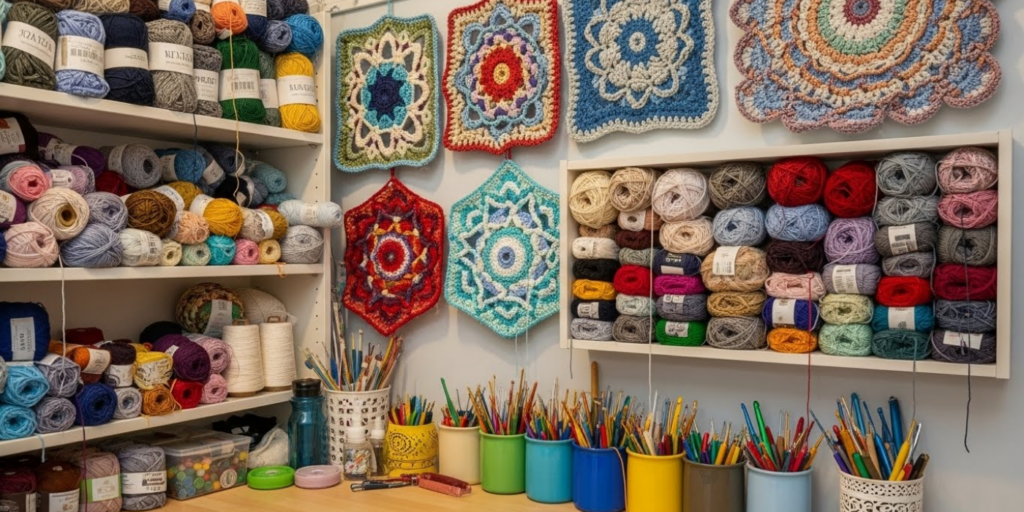
For entrepreneurs in the handmade space, mastering complex crochet stitch combinations isn’t just a technical pursuit—it’s a strategic differentiator. In an era where mass-produced goods dominate retail, consumers increasingly seek authenticity, texture, and narrative in their purchases. A scarf woven with a custom lace-and-bobble hybrid stitch tells a story that a plain acrylic rectangle cannot. This storytelling power translates directly into brand identity and pricing leverage.
From working with multiple crochet brands, I’ve seen firsthand how stitch innovation drives engagement. One independent designer I collaborated with saw a 60% increase in Etsy traffic after releasing a limited-edition shawl featuring a proprietary “cloud ripple” stitch—a fusion of shell, puff, and crossed double crochet. Customers didn’t just buy the product; they bought into the process, often requesting tutorials or behind-the-scenes reels showing how the stitch was constructed.
Moreover, complex stitch combinations open doors to premium product lines: heirloom blankets, structured handbags, architectural home décor. These items command higher price points not because of material cost alone, but because of the perceived skill investment. In contrast, businesses relying solely on beginner-friendly patterns often struggle with commoditization—where customers compare prices rather than craftsmanship.
Importantly, this mastery also fuels content creation. Each new stitch combination becomes a pillar for blog posts, YouTube tutorials, or Instagram Reels—valuable SEO assets that attract organic traffic. When you can articulate why a brioche-inspired crochet mesh works better with cotton than wool (more on fiber considerations later), you position yourself as an expert, not just a maker.
Why This Strategy Works Especially Well in the Crochet Community
The crochet community thrives on shared knowledge, iterative learning, and tactile experimentation—making it uniquely receptive to advanced stitch exploration. Unlike some crafts that guard techniques as trade secrets, crochet has a long tradition of open-source pattern sharing, from vintage doily books to modern Ravelry forums. This culture fosters rapid skill dissemination and collaborative problem-solving.
Experienced designers often recommend leveraging this communal spirit when tackling complex combinations. For instance, if you’re attempting to merge Tunisian knit stitch with traditional Irish crochet motifs, posting a work-in-progress photo in a dedicated Facebook group can yield invaluable troubleshooting tips from others who’ve faced similar tension or gauge issues.
Additionally, the visual nature of crochet lends itself to social media virality. A well-executed video showing the rhythmic dance of fingers creating a honeycomb cable stitch can captivate thousands—even those who don’t crochet. This organic reach builds audience trust, which is essential for monetization down the line.
Furthermore, the modular nature of crochet stitches allows for infinite customization. Once you understand the grammar of increases, decreases, and post stitches, you can remix existing combinations like musical chords. This flexibility empowers makers to develop signature styles that become instantly recognizable—critical for brand building in a crowded digital landscape.
Materials, Tools, or Resources Needed
Before diving into complex stitch combinations, ensure you have the right toolkit. Precision matters more at advanced levels, where minor inconsistencies compound across rows.
Essential Tools:
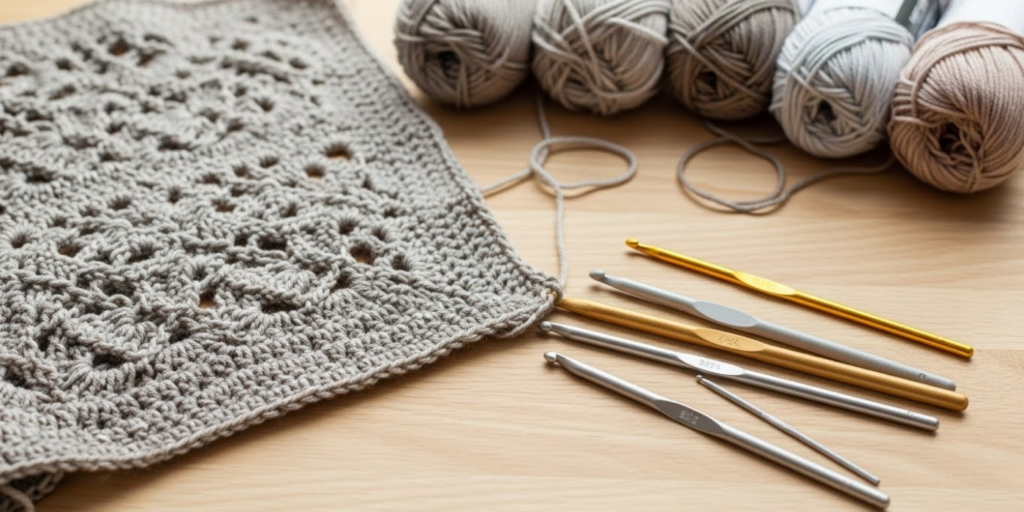
- Hooks: A set of ergonomic hooks in multiple sizes (2.0mm to 6.0mm). Metal hooks offer smooth glide for tight stitches; bamboo provides grip for slippery fibers.
- Stitch Markers: Both locking and ring types. Use different colors to denote pattern repeats or motif boundaries.
- Tapestry Needle: Blunt-tipped for weaving in ends without splitting yarn.
- Measuring Tape & Gauge Ruler: Critical for maintaining consistency across large projects.
- Row Counter: Mechanical or digital—essential when tracking multi-row repeats.
- Blocking Mats & Pins: Necessary for finishing textured pieces evenly.
Digital Resources:
- Stitch Dictionary Apps: Such as Crochet Stitch Guide or Stitch Fiddle for visualizing combinations.
- Charting Software: Programs like Knit Companion help map out custom patterns.
- Video Libraries: Platforms like YouTube or CreativeBug offer slow-motion demos of tricky transitions.
Print Resources:
- The Crochet Answer Book by Edie Eckman
- Beyond the Square Crochet Motifs by Melissa Leapman
- Vintage pattern books from the 1940s–70s, which often feature forgotten stitch hybrids
Having these resources on hand reduces frustration and accelerates learning. In many crochet businesses, investing in quality tools upfront prevents costly re-dos and preserves creative momentum.
Yarn Types and Fiber Considerations
Yarn choice dramatically impacts how complex stitch combinations behave. A stitch that looks crisp in mercerized cotton may collapse into indistinct fluff with superwash wool. Understanding fiber properties is non-negotiable for predictable results.
Cotton & Linen:
Highly recommended for lace, filet, or geometric combos. Their low elasticity holds stitch definition beautifully. However, they lack memory—meaning drape-heavy projects (like shawls) may stretch over time. Use tighter gauges to compensate.
Wool & Wool Blends:
Ideal for textured stitches like bobbles, cables, or popcorn clusters. Wool’s natural crimp enhances dimensionality. But beware: superwash varieties can be too slick, causing stitches to slip during intricate maneuvers. Non-superwash wools felt slightly with blocking, which helps stabilize complex structures.
Acrylic & Synthetic Blends:
Budget-friendly and colorfast, but often too uniform in texture. They work best for practice swatches or children’s items where durability trumps nuance. Avoid for high-end stitch combos requiring subtle gradation.
Silk & Bamboo:
Luxurious drape makes them perfect for elegant lace hybrids (e.g., combining V-stitches with picots). However, their slipperiness demands sharp hook tips and extra attention to tension control.
Variegated vs. Solid Yarns:
When testing new combinations, always start with solid or semi-solid yarns. Variegated or self-striping yarns can obscure stitch patterns, making errors hard to spot. Save multicolor skeins for mastered designs.
From working with multiple crochet brands, I’ve learned that sampling with three different yarn weights (fingering, DK, worsted) reveals how a stitch scales—a key insight for pattern writing.
Skill Level Breakdown
Beginner
Focus on mastering individual components: double crochet, treble, front/back post stitches, clusters. Practice reading written patterns and simple charts. Avoid combinations until you can execute base stitches consistently across 20+ rows without counting every stitch.
Intermediate
Ready to layer two complementary stitches (e.g., shell + single crochet, or puff + chain spaces). Should understand gauge swatching, increasing/decreasing within patterns, and basic motif joining. Can troubleshoot minor misalignments.
Advanced
Capable of designing original combinations involving three or more stitch types, irregular repeats, or directional shifts (e.g., diagonal lace panels intersecting vertical cables). Understands how fiber, hook size, and tension interact dynamically. Can adapt patterns for different garment constructions.
Experienced designers often recommend that intermediate crocheters spend 3–6 months practicing “stitch families”—groupings that naturally complement each other (e.g., all post-stitch variations)—before attempting cross-family fusions.
Step-by-Step Guide to Mastering Complex Crochet Stitch Combinations
Step 1: Deconstruct Existing Patterns
Choose 3–5 published patterns featuring complex combinations (e.g., a market bag using basketweave + mesh, or a sweater with alpine stitch + ribbing). Swatch each section separately. Note:
- Stitch multiples required
- Row repeat structure
- How transitions are handled (e.g., turning chains, skipped stitches)
- Where shaping occurs
Step 2: Map the Rhythm
Every stitch combo has a visual and tactile rhythm. Chart it on graph paper or digitally:
- Assign symbols to each stitch type
- Color-code repeats
- Mark “anchor points” (e.g., where a puff stitch aligns vertically)
This reveals hidden symmetries and potential stress points.
Step 3: Create a Hybrid Swatch
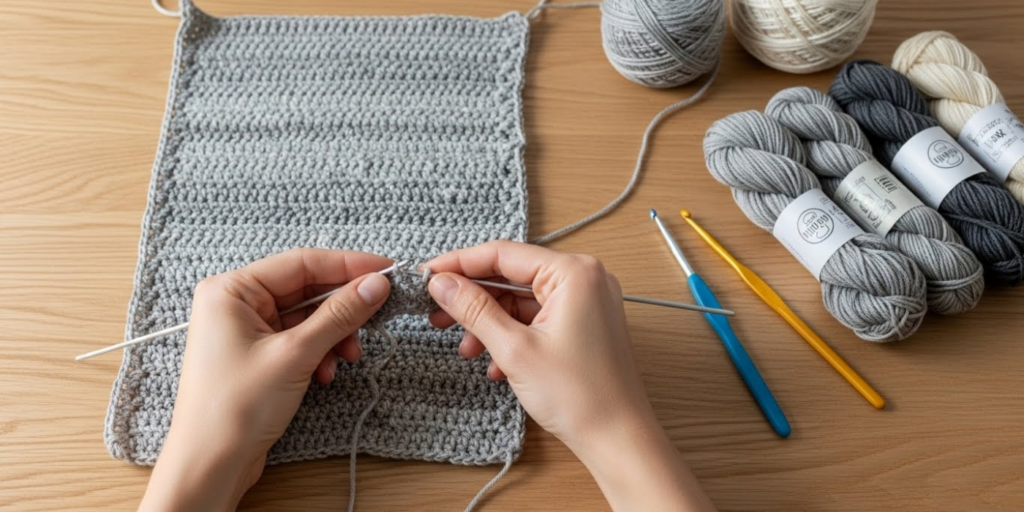
Combine elements from two different patterns. Example: Take the lace repeat from Pattern A and overlay it with the texture cluster from Pattern B. Start small—6″ x 6″ max.
Key questions to ask:
- Do the stitch heights match? (e.g., mixing tall trebles with short sc causes ripples)
- Is the fabric balanced? (Check for curling or biasing)
- Does the right side clearly show both elements?
Step 4: Adjust Tension Intentionally
Complex combos often require micro-adjustments:
- Loosen tension slightly for dense clusters to prevent puckering
- Tighten for openwork sections to maintain shape
- Use a smaller hook for post stitches to reduce bulk
Swatch with your usual tension first, then modify incrementally.
Step 5: Document Every Change
Keep a dedicated notebook:
- Date, yarn, hook size
- Written instructions (even if improvised)
- Photos of right/wrong sides
- Notes on ease of execution (“hard to see next stitch,” “slips easily”)
This becomes your proprietary stitch library.
Step 6: Test in Context
Once satisfied with the swatch, integrate it into a small project—a coaster, headband, or pocket. Real-world use reveals flaws invisible in flat samples (e.g., how the stitch behaves when stretched).
Step 7: Refine and Standardize
If the combo works, write clear instructions using standard abbreviations (per CYCA guidelines). Include:
- Skill level
- Gauge
- Special stitches defined
- Troubleshooting tips (“If clusters lean left, check your yarn-over direction”)
This documentation is essential if you plan to sell or teach the pattern.
Common Mistakes and How to Avoid Them
Mistake 1: Ignoring Stitch Height Compatibility
Mixing very tall stitches (e.g., triple treble) with short ones (single crochet) without transition rows causes uneven fabric.
Fix: Insert “buffer” rows of half-double or double crochet to gradually shift heights.
Mistake 2: Overcomplicating Too Soon
Adding five stitch types in one row overwhelms both maker and viewer.
Fix: Limit new combinations to 2–3 elements initially. Build complexity over multiple rows, not within one.
Mistake 3: Skipping Gauge Swatching
Assuming “close enough” leads to misaligned motifs in larger pieces.
Fix: Always swatch in the exact stitch combo, blocked as the final item will be. Measure over 4″ for accuracy.
Mistake 4: Poor Yarn Management
Carrying multiple strands for colorwork within complex stitches creates bulk.
Fix: Use intarsia for large blocks; tapestry crochet only for small accents. Weave ends as you go.
Mistake 5: Neglecting Right-Side Clarity
Some combos look identical on both sides—but most don’t. If the “wrong” side becomes the focal point accidentally, the design fails.
Fix: Mark the right side with a safety pin on every row until the pattern is internalized.
Mistake 6: Rushing Transitions
Fumbling between a popcorn stitch and a lace fan wastes time and distorts tension.
Fix: Practice transition points in isolation. Say the steps aloud (“yarn over, insert, pull up loop… now switch to lace mode”) to build muscle memory.
In many crochet businesses, these mistakes lead to customer complaints about “confusing patterns.” Clear instructions and realistic expectations prevent this.
Advanced Tips and Professional Insights
Tip 1: Leverage Negative Space
The gaps between stitches are as important as the stitches themselves. In lace hybrids, use chain spaces strategically to frame texture clusters—this creates visual breathing room.
Tip 2: Engineer Reversibility
For scarves or blankets, design combos that look intentional on both sides. Example: Pair front post double crochet with back post on alternating rows—creates a ribbed effect that’s identical front/back.
Tip 3: Control Drape Through Density
Want a stiff market bag? Use tight combos with minimal chains. Seeking fluid drape for a shawl? Incorporate elongated stitches (e.g., dc3tog with extra yarn overs) to add airiness.
Tip 4: Use Math, Not Guesswork
Calculate stitch multiples precisely. If Stitch A needs a multiple of 6 + 2, and Stitch B needs multiple of 4 + 1, find the least common multiple (LCM). Here, LCM of 6 and 4 is 12—so base your repeat on 12 + adjustment.
Tip 5: Borrow from Other Crafts
Knitting’s brioche technique inspired the “crochet brioche” stitch. Similarly, macramé knotting principles can inform 3D crochet textures. Cross-pollination sparks innovation.
Experienced designers often recommend keeping a “stitch journal” where you sketch failed attempts—they frequently contain seeds of future breakthroughs.
Real-World or Hypothetical Examples
Example 1: The “Urban Moss” Blanket
A designer wanted to evoke forest textures using only cotton yarn. She combined:
- Base: Modified moss stitch (sc + ch-1 alternation)
- Overlay: Randomly placed bullion stitches (for lichen-like bumps)
- Border: Linked double crochet for clean edges
Result: A best-selling pattern praised for its tactile depth and eco-friendly materials. The key was varying bullion placement—never in strict repeats—to mimic nature’s asymmetry.
Example 2: Architectural Market Tote
A small business needed a structured bag that wouldn’t sag. Solution:
- Body: Basketweave stitch (for rigidity)
- Sides: Vertical ribbing using front/back post dc
- Handles: Triple-stranded i-cord crochet
By testing 12 yarn/hook combinations, they found that a cotton/linen blend with a 4.5mm hook gave optimal stiffness without brittleness.
Hypothetical Workshop Scenario:
Imagine teaching a class on “Stitch Fusion.” Students start by swatching alpine stitch and star stitch separately. Then, they’re challenged to merge them by replacing every 5th alpine peak with a star cluster. Most fail initially—the star consumes too much space. The breakthrough comes when they reduce the star to 3 points instead of 5, maintaining proportion. This exercise teaches adaptation, not just replication.
Customization and Adaptation Ideas
Once you’ve mastered a core combination, explore these adaptations:
- Scale It: Work the same combo in fingering weight for delicate jewelry or bulky for cozy throws.
- Color Shifts: Use gradient yarns to highlight dimensional elements—darker shades recede, lighter ones pop.
- Directional Play: Rotate the combo 90 degrees for vertical vs. horizontal emphasis (great for garment panels).
- Modular Integration: Turn the combo into hexagons or squares for granny-style assembly.
- Functional Tweaks: Add buttonholes by replacing a cluster with a chain space; reinforce stress points with invisible reinforcement thread.
From working with multiple crochet brands, I’ve seen customization drive repeat customers. One shop offers “stitch personalization”—clients choose base combo + accent element (e.g., “honeycomb base with optional bead drops”), creating co-designed products.
Care, Maintenance, or Best Practices
Complex stitch combinations often trap dirt in textured areas or stretch at openwork sections. Follow these care protocols:
- Washing: Hand-wash in cool water with mild detergent. Avoid agitation—swirl gently. Never wring.
- Drying: Lay flat on a towel, reshaping clusters or lace openings while damp. Use blocking wires for straight edges.
- Storage: Fold, don’t hang, heavy textured items (like afghans) to prevent shoulder stretching. Store in breathable cotton bags with cedar blocks.
- Repair: Keep leftover yarn for darning. For broken clusters, carefully unpick to the last full row and rework—don’t patch mid-stitch.
For businesses selling finished goods, include a printed care card. It reduces returns and builds trust.
Monetization Opportunities
Mastering complex stitch combinations opens diverse revenue streams beyond selling finished items:
- Pattern Sales: Platforms like Etsy, Ravelry, or your own Shopify store. Price based on complexity—$6–12 for advanced combos vs. $3–5 for basics.
- Online Courses: Teach your signature fusion via Teachable or Podia. Bundle with printable stitch guides.
- Workshops: Host live virtual classes focusing on one combo per session. Charge $25–50/person.
- Custom Commissions: Offer bespoke stitch development for clients (e.g., wedding shawls with family-symbol motifs).
- Licensing: License your original combos to yarn companies for promotional kits.
- Content Monetization: Use detailed tutorials to grow a YouTube channel eligible for AdSense, or a blog with affiliate links to recommended tools.
Educational content performs exceptionally well—people will pay to shortcut the learning curve you’ve already navigated.
Frequently Asked Questions (FAQ)
Q1: How long does it take to master complex crochet stitch combinations?
A: Most intermediate crocheters achieve consistent results within 3–6 months of dedicated practice (3–5 hours/week). Mastery—defined as intuitive design ability—takes 1–2 years.
Q2: Can I combine knitting and crochet stitches in one project?
A: Yes, but only with careful planning. Techniques like “knooking” or adding crochet edging to knit pieces work well. Avoid mixing within the same row due to structural incompatibility.
Q3: What’s the hardest part of learning stitch combinations?
A: Maintaining even tension across disparate stitch types. Puff stitches pull tighter than chains, causing ripples. Solution: Practice transitional rows slowly, focusing on hand relaxation.
Q4: Do I need to understand chart reading to create combos?
A: Not mandatory, but highly recommended. Charts reveal spatial relationships text descriptions can’t. Start with simple symbol legends and build up.
Q5: How do I fix a mistake 10 rows back in a complex combo?
A: If possible, frog (rip out) to the error. For valuable yarn, use a lifeline: thread a contrasting strand through a safe row before continuing. This lets you rip back only to that point.
Q6: Are there copyright issues with creating new stitch combinations?
A: Basic stitches are public domain. However, specific written instructions or named proprietary combos (e.g., “Margaret’s Magic Mesh”) may be copyrighted. Always credit inspiration sources and avoid copying exact wording.
Conclusion
Mastering complex crochet stitch combinations is less about innate talent and more about systematic exploration, thoughtful material choices, and relentless practice. As you layer textures, rhythms, and techniques, you’re not just making fabric—you’re developing a visual language that communicates skill, creativity, and intentionality. For makers, this journey deepens personal satisfaction; for businesses, it builds irreplaceable brand equity in a competitive handmade economy.
Start small: deconstruct one beloved pattern this week. Swatch a hybrid. Document what works—and what doesn’t. Remember, every iconic designer began exactly where you are now, hook in hand, wondering how to make stitches sing together. Your unique voice in yarn is waiting to emerge. Keep looping, keep learning, and trust that complexity, approached with patience, always yields beauty.

Emily Parker is a passionate crochet artist and creative storyteller. With years of experience turning simple yarn into beautiful, unique pieces, she loves sharing tips, tutorials, and inspiration with fellow crafters. Emily believes that crochet is more than a hobby it’s a way to express creativity, spread joy, and connect with people through handmade art.