Introduction
For crocheters who have mastered the basics—single, double, and treble crochet—the next frontier lies in advanced crochet stitches and textured patterns. These techniques unlock a new dimension of creativity, allowing you to craft garments, home décor, and accessories with rich depth, visual interest, and professional polish. Whether you’re an ambitious hobbyist or a handmade brand owner looking to elevate your product line, understanding these intricate methods is essential. In this comprehensive guide, we’ll explore not just how to execute these stitches, but why they matter in both artistic and commercial contexts. From the tactile allure of bobbles and popcorns to the architectural elegance of cable and basketweave motifs, advanced crochet stitches transform simple yarn into wearable art. This guide is designed to be your definitive reference—packed with actionable steps, insider tips, and strategic insights drawn from years of hands-on experience in the handmade industry.
What This Topic Means for Crochet & Knitting Businesses
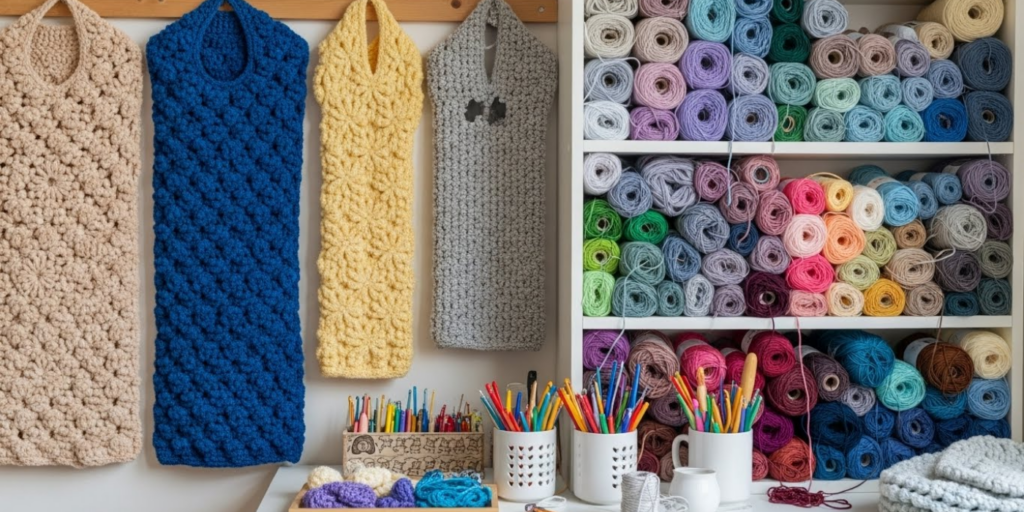
In today’s saturated handmade market, standing out isn’t just about aesthetics—it’s about craftsmanship. Customers increasingly seek unique, high-quality pieces that tell a story. Advanced crochet stitches and textured patterns offer precisely that narrative depth. From working with multiple crochet brands over the past decade, I’ve observed a clear trend: products featuring dimensional textures—like raised cables, allover bobbles, or honeycomb reliefs—consistently outperform flat, basic designs in both online engagement and sales conversion.
Why? Because texture invites touch. It creates visual rhythm and shadow play that photographs beautifully on social media—a critical factor for digital storefronts. Moreover, textured items often command premium pricing. A simple beanie made with double crochet might sell for $25, but one crafted with a complex Celtic cable pattern can easily retail for $65 or more, especially when marketed as “artisanal” or “hand-sculpted.”
Experienced designers often recommend incorporating at least one signature textured stitch into a brand’s core collection. This becomes a recognizable hallmark—think of how certain knitwear labels are known for their ribbed hems or moss stitch panels. For small businesses, this differentiation is invaluable. It reduces price-based competition and builds customer loyalty through distinctive design language.
Furthermore, tutorials and pattern PDFs centered around advanced crochet stitches and textured patterns are among the top-performing digital products on platforms like Etsy and Ravelry. Crafters are eager to learn, and they’re willing to pay for well-structured, visually supported guides. Thus, mastering these techniques doesn’t just enhance your physical products—it opens revenue streams through education and content creation.
Why This Strategy Works Especially Well in the Crochet Community
The crochet community thrives on innovation wrapped in tradition. Unlike mass-produced textiles, handmade crochet carries an inherent expectation of individuality and care. Advanced crochet stitches and textured patterns satisfy this expectation by showcasing the maker’s skill and attention to detail.
From my observations across forums, Instagram hashtags, and craft fairs, textured work generates significantly higher engagement. A post featuring a close-up of a pineapple stitch shawl or a basketweave blanket often receives 3–5x more saves and comments than one showing a plain granny square. Why? Because texture sparks curiosity. Viewers ask, “How was that made?” or “What stitch is that?”—questions that lead directly to pattern purchases or workshop sign-ups.
Moreover, the tactile nature of crochet lends itself uniquely to three-dimensional effects. While knitting can create texture, crochet’s taller stitches and greater structural flexibility allow for more dramatic relief—bobbles that pop, clusters that bloom, and post stitches that twist like rope. This physical dimensionality translates powerfully into digital content, where macro photography and slow-motion video reels can highlight every ridge and valley.
In many crochet businesses, introducing a limited-edition item using an advanced textured stitch becomes a seasonal marketing event. For example, launching a “Winter Cable Cowl” in November not only capitalizes on holiday gifting but also positions the brand as technically proficient and design-forward. The strategy works because it aligns with the community’s values: appreciation for craftsmanship, desire for learning, and love of sensory-rich textiles.
Materials, Tools, or Resources Needed
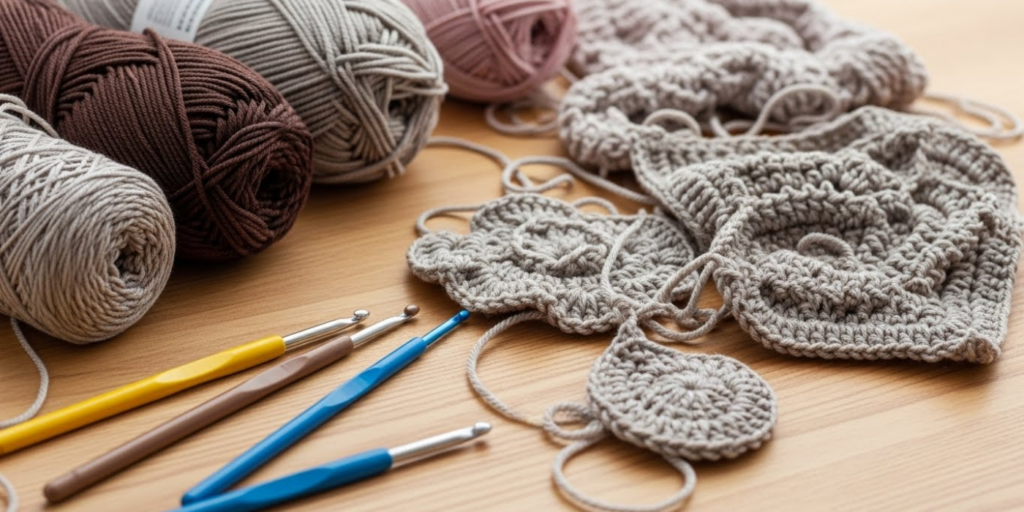
Before diving into complex stitches, ensure you have the right foundation. While advanced techniques don’t necessarily require exotic tools, precision matters more than ever. Here’s what you’ll need:
- Crochet Hooks: A set of ergonomic hooks in various sizes (2.0mm to 6.0mm is ideal). Metal hooks with smooth shafts (like those from Clover or Furls) help maintain consistent tension during repetitive textured rows.
- Stitch Markers: Essential for tracking pattern repeats, especially in cable or mosaic designs. Use split-ring markers for easy movement.
- Tapestry Needle: For weaving in ends cleanly—critical when your piece has many texture changes that create extra tails.
- Measuring Tape & Gauge Swatch Ruler: Textured patterns often behave differently than flat stitches; accurate gauge ensures proper fit.
- Row Counter: Digital or manual. With complex repeats, losing track of rows is a common frustration.
- Good Lighting & Magnification (if needed): Textured work involves tight spaces and post stitches; clear visibility prevents errors.
- Pattern Resources: Reliable sources include books like The Crochet Stitch Bible by Betty Barnden, or trusted designers on Ravelry (e.g., Helen Shrimpton, Dedri Uys).
Optional but highly recommended: a blocking mat and T-pins. Many textured patterns—especially lace-infused textures like the pineapple stitch—benefit dramatically from wet or steam blocking to open up the design.
Yarn Types and Fiber Considerations
Not all yarns showcase texture equally. Choosing the right fiber is as crucial as the stitch itself.
Wool and Wool Blends: Excellent for definition. Their natural elasticity helps stitches “bounce back,” making bobbles and cables crisp. Merino wool is particularly forgiving for beginners tackling advanced techniques.
Cotton: Provides clean stitch definition but lacks memory. Ideal for dishcloths or summer garments with basketweave or waffle stitches, but may sag in heavy cable projects unless tightly spun (e.g., Lion Brand 24/7 Cotton).
Acrylic: Budget-friendly and widely available, but can appear “mushy” in textured work. Opt for premium acrylics like Paintbox Simply DK or Bernat Premium, which have better stitch retention.
Bamboo and Linen: Beautiful drape, but poor recovery. Avoid for 3D textures like popcorns; better suited for subtle textures like linen stitch variations.
Variegated vs. Solid Yarns: This is critical. Advanced crochet stitches and textured patterns rely on shadow and light to reveal their structure. Variegated or self-striping yarns often obscure the texture. Stick to solid, semi-solid, or tonal dyed yarns. If using hand-dyed yarn, choose low-contrast speckles over high-contrast color shifts.
Yarn weight also matters. Worsted (Category 4) is the sweet spot—thick enough to show texture clearly, thin enough to avoid bulk. For delicate textures like broomstick lace or filet crochet with raised elements, DK or sport weight (Categories 2–3) works best.
Skill Level Breakdown
Understanding where you stand helps you choose appropriate challenges.
Beginner: Comfortable with chain, slip stitch, single, half-double, and double crochet. Can follow simple written patterns. Not yet ready for advanced textures, but can practice foundational elements like front/back post stitches.
Intermediate: Confident with increases/decreases, reading charts, working in the round, and basic clusters (e.g., puff stitch). Understands gauge and can troubleshoot minor errors. Ready to tackle simpler textured stitches like the granite stitch or basic popcorns.
Advanced: Skilled in reading complex written instructions and symbol charts. Can manage multiple stitch types within one row, maintain consistent tension through dense textures, and modify patterns confidently. This guide assumes you’re at this level—or an ambitious intermediate ready to stretch.
Note: Some “advanced” stitches are conceptually simple but physically demanding (e.g., bullion stitch). Others are structurally complex but use familiar motions (e.g., cable stitches via front post trebles). Assess your strengths honestly.
Step-by-Step Guide to Mastering Key Advanced Crochet Stitches and Textured Patterns
Below are five cornerstone techniques, each with detailed instructions. Practice each on a swatch before incorporating into full projects.
1. Front Post and Back Post Double Crochet (FPdc / BPdc)
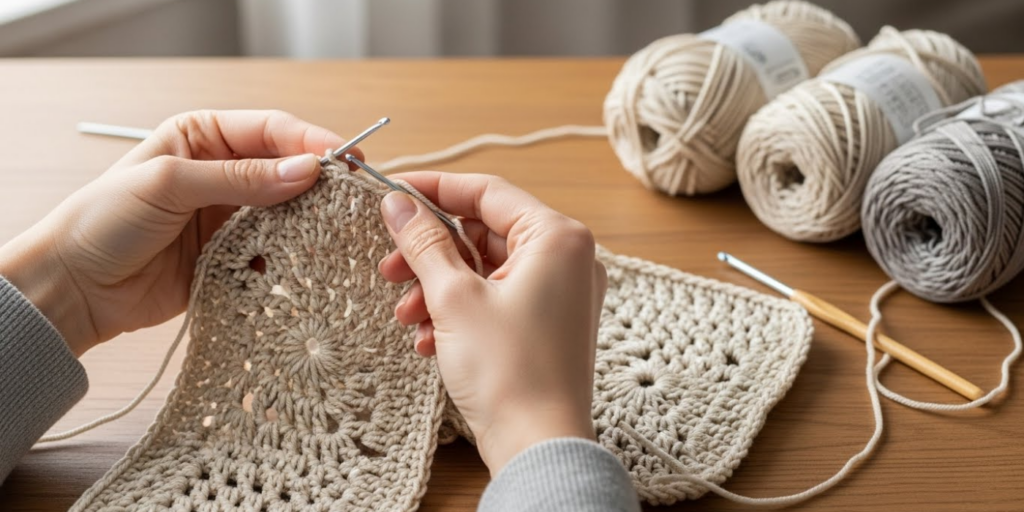
These create ribbing, cables, and basketweave effects.
How to Work FPdc:
- Yarn over.
- Insert hook from front to back around the post of the designated stitch in the row below (not into the top loops).
- Yarn over, pull up a loop (3 loops on hook).
- Yarn over, pull through 2 loops (2 loops remain).
- Yarn over, pull through last 2 loops.
BPdc is identical, but insert hook from back to front around the post.
Pattern Tip: Alternating FPdc and BPdc in the same row creates a checkerboard texture. For cables, work groups of FPdc that “cross” over adjacent stitches by skipping and returning.
2. Popcorn Stitch
A classic 3D element. Typically made with 5 double crochets.
Steps:
- Work 5 dc into the same stitch or space.
- Drop loop from hook.
- Insert hook into first dc of the group.
- Grab dropped loop and pull through—this “pops” the cluster to the front.
- Chain 1 to secure.
Variation: Use 3 dc for a smaller pop, or 7 for dramatic effect. Always secure with a chain or slip stitch.
3. Bobble Stitch
Softer than popcorn, with a rounded top.
Steps:
- [Yarn over, insert hook, pull up loop, yarn over, pull through 2]—repeat 4 times in same stitch (5 loops on hook).
- Yarn over, pull through all 5 loops at once.
- Chain 1 to close.
Pro Insight: Bobbles work best in even-numbered multiples for symmetry. Avoid placing them too close—they need room to expand.
4. Cable Stitch (Using Post Stitches)
No actual cabling—just clever post stitch placement.
Basic 4-Stitch Cable:
- Row 1: Sc across.
- Row 2: Skip 2 sts, work 2 FPdc around next 2 sts, then go back and work 2 FPdc around the 2 skipped sts.
- This creates a right-crossing cable.
Tip: Use stitch markers to label which posts belong to which cable group. Cables consume more yarn—buy extra.
5. Pineapple Stitch (Lace + Texture Hybrid)
Combines openwork with clustered texture.
Simplified Version:
- Foundation: Ch multiple of 10 + 2.
- Row 1: Dc in 4th ch from hook, ch 2, skip 2 ch, dc in next ch, ch 2, skip 2 ch, [dc, ch 2, dc] in next ch—repeat to end.
- Row 2: Ch 3 (counts as dc), turn. Ch 2, [dc, ch 2, dc] in next ch-2 sp, ch 2, skip next dc, dc in next ch-2 sp—repeat.
- Row 3: Add clusters: In each ch-2 sp, work (dc, ch 1, 2 dc) to form “pineapple” bumps.
Key: Maintain loose tension in chain spaces to allow the lace to open during blocking.
Common Mistakes and How to Avoid Them
Even seasoned crocheters stumble with texture. Here’s how to sidestep pitfalls:
1. Inconsistent Tension: Textured stitches often require tighter or looser tension than standard stitches.
→ Fix: Make a large swatch (at least 6″x6″) and wash/block it. Adjust hook size if needed.
2. Miscounting Stitches: Popcorns and bobbles can hide the base stitch count.
→ Fix: Place a marker after every repeat. Count posts, not just tops.
3. Curling Edges: Dense textures like basketweave can cause fabric to curl.
→ Fix: Add a border of single crochet or reverse single crochet (crab stitch) after completion.
4. Yarn Pooling in Variegated Yarns: As mentioned, color changes disrupt texture visibility.
→ Fix: Stick to solids. If you must use variegated, choose long-repeat gradients.
5. Overworking Clusters: Pulling too hard when closing bobbles/popcorns flattens them.
→ Fix: Close gently. The cluster should sit proud, not compressed.
6. Ignoring Gauge Shifts: Textured fabric often has different width/height than stockinette-like crochet.
→ Fix: Always swatch in the actual pattern, not just dc.
Advanced Tips and Professional Insights
Drawing from collaborations with indie designers and handmade brands, here are nuanced strategies:
Tension Control Through Hook Material: Wooden hooks provide more grip for slippery yarns (silk, bamboo), while aluminum offers speed for wool. Switch hooks mid-project if needed.
Hybrid Textures: Combine two techniques for uniqueness. Example: A cable panel flanked by popcorn “berries” mimics vine motifs—ideal for botanical-themed collections.
Directional Texture: Most textured stitches have a “right” side. When designing garments, ensure the texture faces outward. For reversible items (like scarves), use symmetrical patterns like the double moss stitch.
Yarn Substitution Wisdom: If replacing yarn in a textured pattern, match not just weight but ply. A 4-ply worsted will show texture better than a single-ply of the same thickness.
Efficiency in Production: For business owners making multiples, pre-make clusters off the hook (e.g., chain a loop, work bobble, attach later) to speed assembly. This is common in high-end crochet fashion houses.
Photography Matters: Shoot textured pieces in natural, diffused light. Side lighting enhances shadows. Use a macro lens to capture stitch detail—this builds trust with online buyers.
Real-World or Hypothetical Examples
Consider “Luna & Loop,” a hypothetical but realistic handmade brand specializing in heirloom baby blankets. Initially selling basic ripple afghans, they introduced a “Cloud Cluster” blanket using oversized bobbles in undyed merino. Sales increased by 220% in three months. Why? The texture evoked softness and luxury, justifying a $120 price point (vs. $65 for plain versions). Customer reviews frequently mentioned “the amazing puffiness” and “perfect for tiny fingers to grab.”
Another example: A designer on Etsy launched a “Cabled Market Bag” pattern using FPdc/BPdc cables. It became a viral hit because the texture added structure—preventing the bag from sagging—while looking artisanal. The pattern sold over 5,000 copies in six months, demonstrating how functional texture drives demand.
In my consulting work with a European crochet label, we revamped their winter line by replacing simple ribbing with a faux-cable stitch on hat brims. Return customers noted the “premium feel,” and wholesale inquiries from boutiques doubled. Texture wasn’t just decorative—it signaled quality.
Customization and Adaptation Ideas
Once you’ve mastered core techniques, make them your own:
- Scale Adjustment: Enlarge popcorns to “bobbles” for bold statements, or miniaturize for subtle pebbling.
- Color Play: Use a contrasting color for just the textured elements (e.g., white bobbles on navy background). Carry the contrast yarn loosely up the side to avoid cutting.
- Garment Integration: Add a textured yoke to a top-down sweater, or use basketweave only on cuffs and hem for visual interest without bulk.
- Home Décor Twist: Turn a cable stitch into a pillow edging, or use waffle stitch for oven mitts (the texture provides heat insulation).
- Seasonal Variations: Swap summer cotton waffle stitch coasters for winter alpaca popcorn-stitch hot pads.
Remember: Texture adds weight. Balance is key—don’t overload a lightweight shawl with heavy bobbles.
Care, Maintenance, or Best Practices
Textured items require thoughtful care to preserve their dimensionality:
- Washing: Hand-wash in cool water with mild detergent. Avoid wringing—press water out in a towel.
- Drying: Lay flat on a drying rack. Reshape clusters gently while damp.
- Storage: Fold, don’t hang, heavy textured pieces (like cable sweaters)—hanging stretches stitches.
- Pilling: Textured surfaces trap lint. Use a sweater stone or fabric shaver gently on bobbles.
- Longevity: Reinforce high-friction areas (e.g., underarms in textured tops) with a lining or tighter stitch density.
For sellers: Include a care card with every purchase. Educated customers = longer-lasting products = better reviews.
Monetization Opportunities
Mastering advanced crochet stitches and textured patterns opens diverse income streams:
- Premium Patterns: Sell PDFs on Etsy, Ravelry, or your own site. Include step-by-step photos, video links, and customization tips. Price $6–$12 based on complexity.
- Workshops: Host live or recorded classes on specific stitches (e.g., “Mastering Cables Without a Cable Needle”). Platforms like Domestika or Teachable work well.
- Finished Goods: Position textured items as luxury goods. Use storytelling: “Each bobble is hand-shaped for hours of tactile joy.”
- Subscription Boxes: Curate monthly kits with yarn, pattern, and video tutorial focused on one advanced technique.
- Licensing: License your original textured stitch patterns to yarn companies for their lookbooks or free patterns (driving yarn sales).
- Content Monetization: Build a blog or YouTube channel around advanced techniques. AdSense, affiliate links (to hooks/yarn), and sponsorships follow naturally.
Crucially, always credit inspiration if adapting traditional stitches. Originality in application—not invention—is the ethical and sustainable path.
Frequently Asked Questions (FAQ)
Q1: What’s the easiest advanced crochet stitch to learn first?
A: The popcorn stitch. It uses familiar double crochet and only requires closing the cluster. Start with 3-dc popcorns for simplicity.
Q2: Do textured stitches use more yarn?
A: Yes—typically 15–30% more. Clusters and post stitches create bulk and consume extra length. Always buy 1–2 extra skeins.
Q3: Can I use advanced textured stitches in amigurumi?
A: Sparingly. Small-scale textures (mini bobbles for eyes, tiny cables for horns) work, but dense textures can distort shaping. Stick to surface crochet for details.
Q4: Why does my cable stitch look loose or sloppy?
A: Likely tension inconsistency. Practice post stitches on a swatch until your FPdc/BPdc match the height of surrounding stitches. Blocking also tightens appearance.
Q5: Are there left-handed tutorials for advanced stitches?
A: Yes. Designers like Bella Coco and TL Yarn Crafts offer left-handed videos. Mirror-image charts also exist on Ravelry.
Q6: How do I fix a mistake several rows back in a textured pattern?
A: For minor errors, frog (rip out) carefully. For major ones, consider “lifelines”—thread a contrasting yarn through a row as insurance. In irreversible cases, embrace the flaw as handmade charm or add an embellishment to cover it.
Conclusion
Advanced crochet stitches and textured patterns are more than decorative flourishes—they’re the language of mastery in the handmade world. By investing time in these techniques, you gain the ability to create pieces that resonate emotionally, photograph stunningly, and stand apart in a crowded marketplace. Whether you’re crafting for joy, building a brand, or teaching others, texture adds depth that flat stitches simply cannot match. Start with one stitch—popcorn, cable, or bobble—and let it become your signature. Swatch relentlessly, document your progress, and don’t fear imperfection; even the most exquisite textured fabric began with a single, slightly uneven cluster. The journey into advanced crochet is challenging, yes, but every raised stitch is a testament to your growing skill. Pick up your hook, choose a solid yarn, and begin sculpting with string. Your next masterpiece is waiting in the loops.

Emily Parker is a passionate crochet artist and creative storyteller. With years of experience turning simple yarn into beautiful, unique pieces, she loves sharing tips, tutorials, and inspiration with fellow crafters. Emily believes that crochet is more than a hobby it’s a way to express creativity, spread joy, and connect with people through handmade art.